Energy prices are set to rise sharply in January: here’s why, and what you can do
Next week, Ofgem will announce the new energy price cap for 1 January to 31 March 2027. We expect it to jump by about 25%, meaning that if rates stayed the same for a year, a typical dual-fuel household’s annual bill would hit roughly £2,160 (up from £1,723).
Your actual annual bill almost certainly won't look like this: it depends on things like how much energy you use, where you live, how you pay and what prices do in the future (remember, this price cap only lasts for three months).
Jump to . . .
Next week, Ofgem will announce the new energy price cap for 1 January to 31 March 2027. We expect it to jump by about 25%, meaning that if rates stayed the same for a year, a typical dual-fuel household’s annual bill would hit roughly £2,160 (up from £1,723).
Your actual annual bill almost certainly won't look like this: it depends on things like how much energy you use, where you live, how you pay and what prices do in the future (remember, this price cap only lasts for three months).
This is a big increase and we know it comes at a time when so many are already struggling. So we wanted to explain what’s driving it, whether your tariff will be affected and how to weigh up your options before the new year.
Remember, you don’t have to manage this alone. Explore everything we can do to help, including our multimillion-pound Octo Assist fund, in our winter support guide, which also explains everything you need to know about the government's £100 payment to help with bills.
60-second breakdown
Watch our video to find out why energy bills are going up (and why now), and what you can do about it.
Why are energy prices jumping?
Wholesale energy prices make up the biggest chunk of your bill, and right now, global gas supplies are tightly restricted, which spikes prices. Gas is traded on an international market, so when supply gets choked off, buyers have to compete for what’s left, pushing prices up everywhere. Conflict in the Middle East is disrupting major global gas routes and keeping supplies tightly squeezed. Gas prices are so important because the price of electricity is often set by gas. Jump to FAQs to find out why.
Most of the price cap increase is expected to come from gas unit rates, which are expected to jump by more than a third while electricity unit rates climb by less than a quarter. Standing charges may rise slightly. (Wondering why there are still gas standing charges when the government said they were being axed? Check out our explainer).

So why is the January price cap set to rise? The war in Iran started in February
It comes down to the way Ofgem calculates the cap. While it factors in other things like network and policy costs, the biggest piece of the puzzle is wholesale energy, which it tracks over a three-month window to decide where to set the cap.
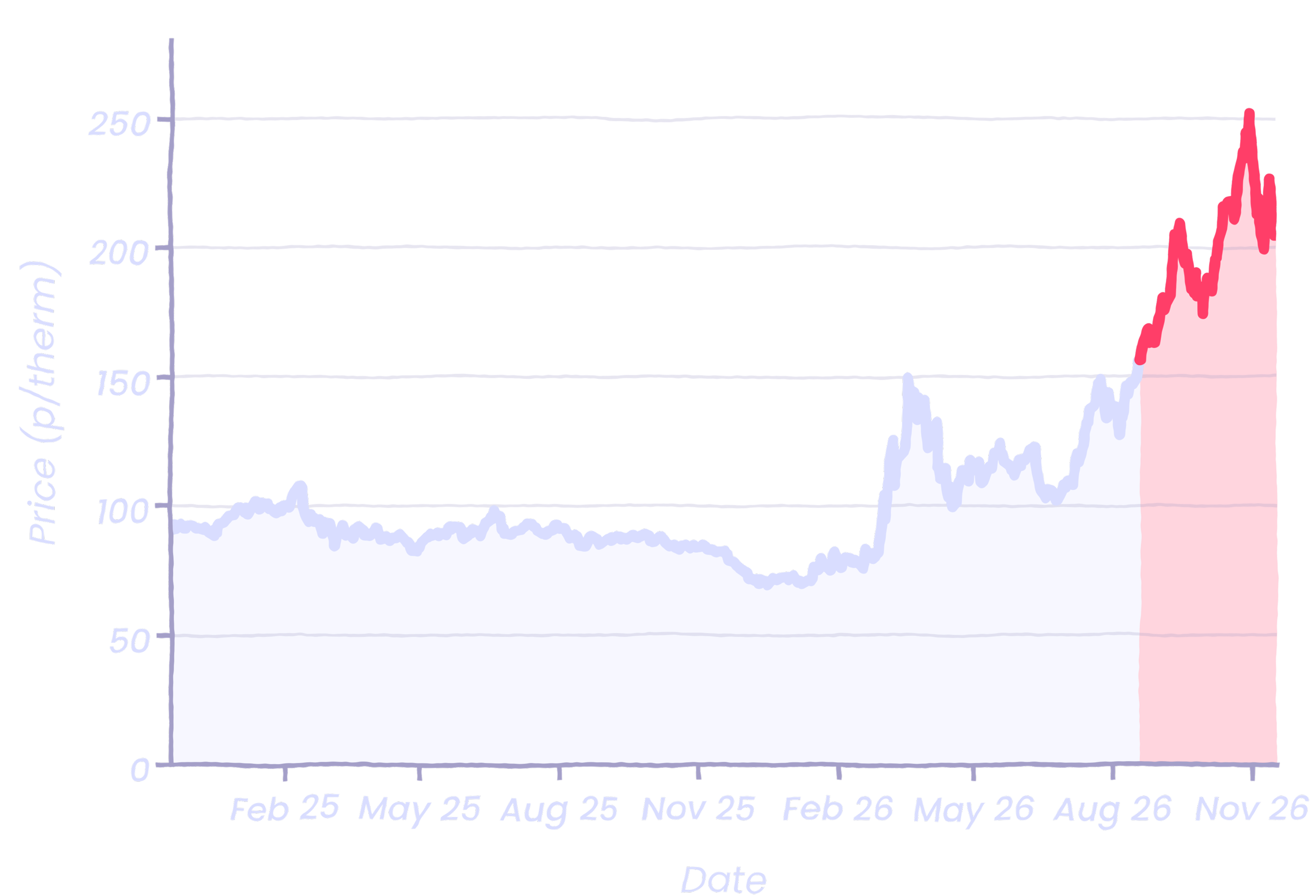
Wholesale gas prices from Nov 24 to Nov 26. Highlighted in red are the prices that Ofgem used to set the January price cap
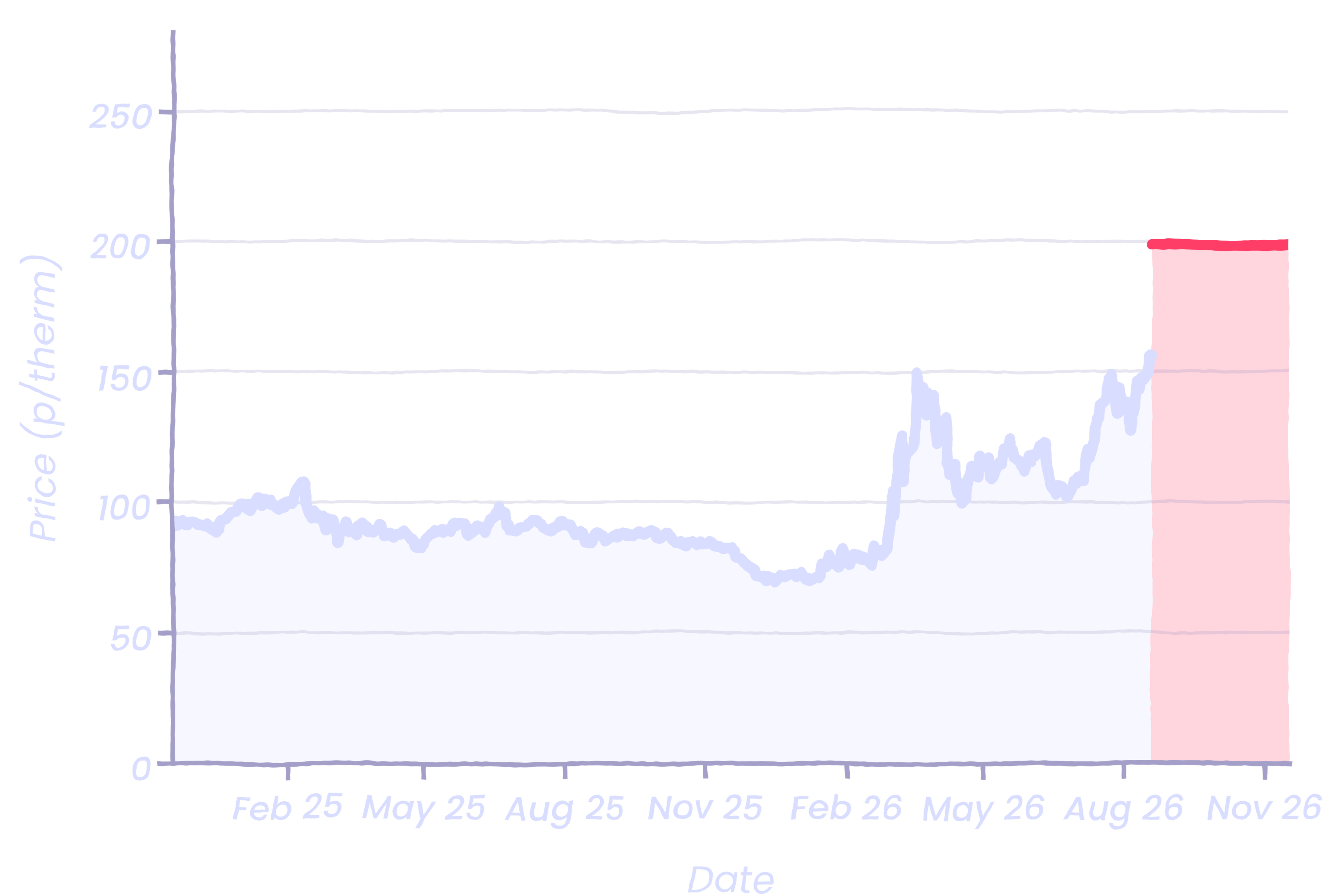
Ofgem takes an average of energy costs in the last three months (shown above) and uses that calculation to set the price cap. Higher-cost energy = higher price cap
For this price cap, the window ran from 19 August to 17 November, as you can see above. A few things conspired to push wholesale gas prices higher during that time:
Ongoing geopolitical conflict in the Middle East continuing to restrict global gas supplies
Historically low gas storage levels across Europe heading into winter
Cold snaps on the radar: With storage already tight, a chilly turn in mid-November and forecasts for colder weather across Europe have spooked markets

Will my rates change in January?
If you’re on Flexible Octopus or a variable smart tariff: We’re expecting rates to go up on 1 January. We’ll email you before that with your new unit rates and standing charges.
If you’re on a fixed tariff: Your rate is protected until your fix ends.
If you’re on Tracker or Agile: Your prices follow wholesale energy markets directly, so the price cap doesn’t set your rates and your tariff will keep working as normal.
Should I fix my tariff now?
We wish we could give everyone a really clear answer about this. But nobody has a crystal ball and the decision is quite personal. Our Fixed v Flexible blog has a lot of useful information, and here’s how the trade-off stands right now:
Is it time to fix my energy tariff?
Is it time to fix my energy tariff?
How the numbers stack up: Right now (19 November, but things do change quickly), our fixed deals are more expensive than our Flexible rate. However, fixes are significantly cheaper than what’s expected from 1 January.
Buying peace of mind: If geopolitical tensions worsen or winter is particularly harsh, fixed tariffs could climb further. Yet if things calm down, market prices could fall and so could fixes. If you’d rather know exactly what your rate will be (and want to dodge the January jump), it may be worth fixing.
Worth knowing: Our fixes currently come with an exit fee. We don’t usually like these, but they’re fairly unavoidable at the moment: find out why.
Should I stay on Flexible Octopus?
Should I stay on Flexible Octopus?
Always below the cap: We’ve priced Flexible Octopus below Ofgem’s price cap every single day since it began, and that isn’t changing. (In fact, we fought for the price cap in the first place).
Keep winter usage in mind: Unlike a summer price rise, the January cap lands right in the middle of peak heating season. If you stay on Flexible to see whether markets cool down in spring, expect higher bills over January, February and March.
No exit fees: You’re always free to leave Flexible Octopus if you change your mind
Will energy prices ever come down? How do we get off this rollercoaster?
The truth is, nobody really knows what will happen after April. Britain can’t control global gas markets and we don't think that households should have to hold their breath every three months waiting for Ofgem’s next announcement.
We need to be more self-reliant so crises in far-off places can't send our energy bills spiralling.
The only permanent fix is changing how our energy system works: building renewables, burning less gas, stopping the waste of cheap British wind power when the grid gets congested, and taking levies off electricity bills so clean tech is cheaper to run.
Moving to electric heating, solar, home batteries and EVs can insulate your home from global fossil fuel shocks and we’re working flat-out to bring upfront costs down for everyone.
FAQs
Does the energy price cap actually limit my bills?
Does the energy price cap actually limit my bills?
The price cap is set by Ofgem, the energy regulator. Despite the name, it does not limit your total bill and it does not apply to all tariffs. If you're on a "default" or "standard variable" tariff, it actually puts a cap on:
the maximum amount a supplier can charge you for each unit of gas and electricity you use
the daily standing charge (the fixed cost to connect your home to the grid).
Think of it like this: if there were a price cap for milk, it would limit the cost of each bottle, but if you bought more bottles, you’d still pay more. Read more on Ofgem's website.
If it's just a unit cap, why do you hear figures like "£2,160 a year" on the news?
That figure is just an illustration. To get that number, Ofgem takes the capped unit prices and standing charges, and multiplies them by the exact number of units they estimate a "typical" household in an "average" part of the country uses in a year. Then that's the figure that gets reported everywhere. But it can actually be pretty inaccurate if you use much less or much more energy than the "typical" home.
To continue our milk analogy, if The Daily Moos reported that the price cap on milk had gone up from £70 to £80, it would just mean that Tesco was allowed to charge more for each bottle so the average family would spend more.
Plus, the price cap assumes that rates won't change again, which they will (every three months). So, unless you fix, no one will end up paying the price cap prices for a whole year.
Does the price cap vary by region?
Yes! The cap on standing charges and unit rates both vary depending on where you live. This is because of things like how many people live in your area and how much work is needed on the energy network there.
They also vary depending on as couple of other things, including how you pay your bill (we know, this is all quite complicated!). Basically, it's a bit cheaper if you pay by Direct Debit because the supplier doesn't have to do so much work. You can check price cap rates for your area and payment method on Ofgem's website.
How can I cut my energy bills?
How can I cut my energy bills?
Reduce your combi boiler flow temperature. This is one of the biggest and most important energy-saving tips we have. In this blog, we explain why it matters and offer other energy-saving tips.
Set up a direct debit, if you don't have one already. Because our admin costs are lower if customers have direct debits, we can make your prices cheaper if you set one up. You could save more than £100 a year.
Get a smart meter and unlock access to Octoplus, our exclusive rewards programme for smart meter customers. It offers a variety of perks and incentives, including Happy Hours: free power at the weekends when you cut down during Saving Sessions. Last year, our customers had access to over £300 worth of rewards. Plus, if you have a smart meter, you can...
Consider a smart tariff: If you have an EV, heat pump, solar panels or/and a home battery, you could make big savings. Even if you don’t have any smart tech, but can shift a significant chunk of your energy use to off-peak times, they could be worth considering.
Does this price cap remove gas standing charges?
Does this price cap remove gas standing charges?
Gas standing charges are still on your bill for now, but there are plans to remove them. In October’s Autumn Budget, the government announced plans to abolish gas standing charges and has asked Ofgem to make the change by the end of 2027 (or as soon as possible after).
When it does happen, those fixed network costs won’t disappear completely – they’ll move onto the gas unit rate instead. That means how much you pay will depend more on how much gas you actually use, giving you more control over your bill.
Treasury estimates suggest around 60% of gas households could save an average of £45 a year, though some higher-usage homes may pay a bit more (with targeted support planned for vulnerable high-usage households). Electricity standing charges are staying put for now, with further details on reforming those expected next year.
Why do electricity prices rise when gas prices are up?
Why do electricity prices rise when gas prices are up?
Gas still sets the price of electricity a lot of the time, so when wholesale gas spikes, electricity bills get pulled up with it. Watch this super-quick video to find out how the price of electricity is set.
How do I switch my tariff?
How do I switch my tariff?
You can normally change tariffs on your online account.
Log in to your Octopus account
Click 'Change my tariff': it's one of the first options under your account balance.
There, you can compare your energy costs on your current tariff to our other available tariffs.
If you see an option you like, you'll be able to switch to it yourself online.
What if I can't see the option to move tariff?
You'll be able to see this option if you're on a variable tariff (like Flexible Octopus), or if you're on a fixed tariff and within 45 days of the end of your contract. If you have any questions or can't see the option, contact us for help.
How does it work for smart tariffs like Octopus Cosy or Intelligent Octopus Go?
How does it work for smart tariffs like Octopus Cosy or Intelligent Octopus Go?
If you’re on a fixed smart tariff, nothing changes. If you’re on a variable version, we expect to increase your prices when the cap comes into effect.
What about export rates?
What about export rates?
The price cap doesn’t affect export rates, so we have no plans to change them. Just keep selling us those beams!
Published on

Nicki Slater-Arnold
Energy Writer