What does the war in the Middle East mean for UK energy prices? | October 2026

Global gas prices have spiked this year, driven by conflict in the Middle East, which has driven up wholesale energy prices up dramatically.
Below, we’ll explain what this means for your energy tariff right now, what we know about energy prices in the future, and answers to the main questions we've been getting.
This page was last updated on October 21, 2026, but markets are changing rapidly, so it may well go out of date as soon as it's published! We'll keep it updated with any major changes.
Why are global gas prices going up?
What’s going to happen with my energy tariff?
Should I fix my prices?
I'm on Tracker or Agile, what does it mean for me?
I'm a business customer, what does it mean for me?
What would it take for the UK to be 'energy secure'?
Why have global gas prices gone up?
The Strait of Hormuz – the major shipping channel where oil and gas are transported from the Middle East to the rest of the world – has been more or less a no-go zone since March, blocking nearly 20% of global gas shipments for more than six months.
The massive supply shortage has kept the price of gas higher globally, and because electricity prices are tied to gas, they have risen as well.
Amid huge pressure on the warring countries, the US and Iran signed an initial peace deal on June 18, which is why you might have read that the war was "over". However, this "memorandum of understanding" proved as fragile as analysts had feared. On July 8, the truce collapsed entirely with renewed attacks on tankers in the Strait of Hormuz and escalating retaliatory strikes, bringing the ceasefire to an abrupt and devastating end.
For so many reasons, most of all for the human life at stake, we had hoped for a swift and peaceful resolution. Months later, there is still no end in sight and pressure on prices is still high.
What’s going to happen with my energy tariff?
If you’re on our variable tariff, Flexible Octopus, you're always protected by the Ofgem energy price cap. This cap gets updated every three months (four times a year) to reflect what's happening in the global energy market.
When the wholesale cost of gas stays high, the price cap eventually has to rise to reflect those higher real-world costs. That’s what happened with the latest price cap update, which came into effect on October 1, pushing prices about 4% higher.
On the flip side, if global prices drop, the cap falls too — and we’ll automatically lower your prices so you start saving right away.
Will tariff prices go up longer term?
We were forced to push up our fixed prices sharply after the war started. It’s impossible to predict the future: they could go up more, or they could come down – it largely depends on what happens in the Middle East.
So, should I fix my prices?
None of us has a crystal ball that shows how long this conflict will last, so we can’t know for sure what’s best.
If you’re on a fixed tariff with several months left to go, then it might be best to stay on that, as otherwise you may be paying more in the short term. Check your tariff (scroll down til you see your tariff and meter info).
If you’re on Flexible Octopus, or nearing the end of a fixed tariff, and feeling uncertain about ongoing conflict in the Middle East, you may be weighing up your options.
If you need certainty about your energy bills for the next year, we're still offering fixed tariffs at the moment. They're more expensive than they were a few weeks ago, but if you just can't risk future rises over winter, they could be a good choice.
It’s also worth bearing in mind that our latest fixed tariffs include exit fees, so you’d want to consider whether you might need to switch again later on down the line.
In most cases you can change your tariff online, and if not, email hello@octopus.energy and we'll help.
You’ll be able to fix online if you’re on Flexible Octopus or you’re within 49 days of the end of your fix. If you can’t see the option to fix online, you can chat to our team instead – email hello@octopus.energy.
I’m on Octopus Tracker or Agile Octopus – should I move to a standard tariff right now?
That's genuinely your decision and we'd never push you either way. What the data shows is that with these dynamic, wholesale-based tariffs, you may pay more than standard tariff customers in the short term, but often these spikes don't erase long-term gains.
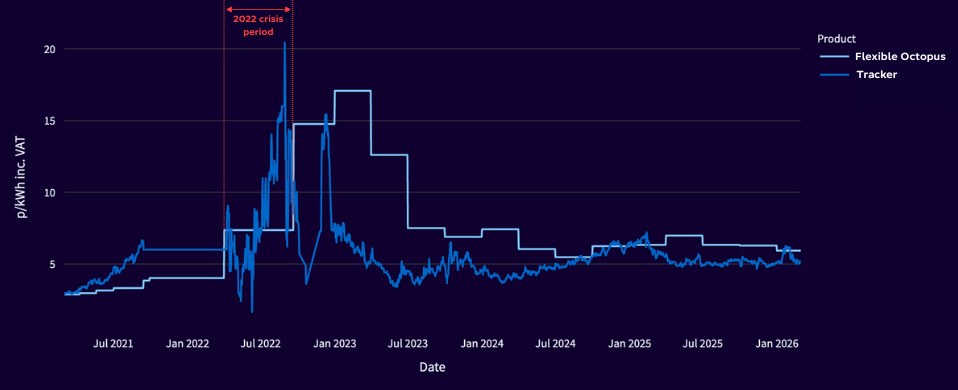
Historic Tracker gas rates vs the Flexible Octopus price cap, 2021-2026
We don't know how long conflict could last, but if the situation stabilises soon and wholesale prices fall back quickly, leaving your dynamic tariff now means being locked out for up to 9 months - so would mean missing out on those lower prices for a while.
Over the past five years, Tracker and Agile customers who stayed the course have come out with savings.
If you'd like security and stability during this turbulence, you're free to fix now or move to Flexible Octopus, our price cap protected tariff – read more about those options above.
Whatever you decide, we're here to help.
I'm a business customer, what does it mean for me?
We've made a separate business-focused blog, just for you.
Check it out: For businesses - what does the conflict in the Middle East mean for my energy prices?
What would it actually take for the UK to be 'energy secure'?
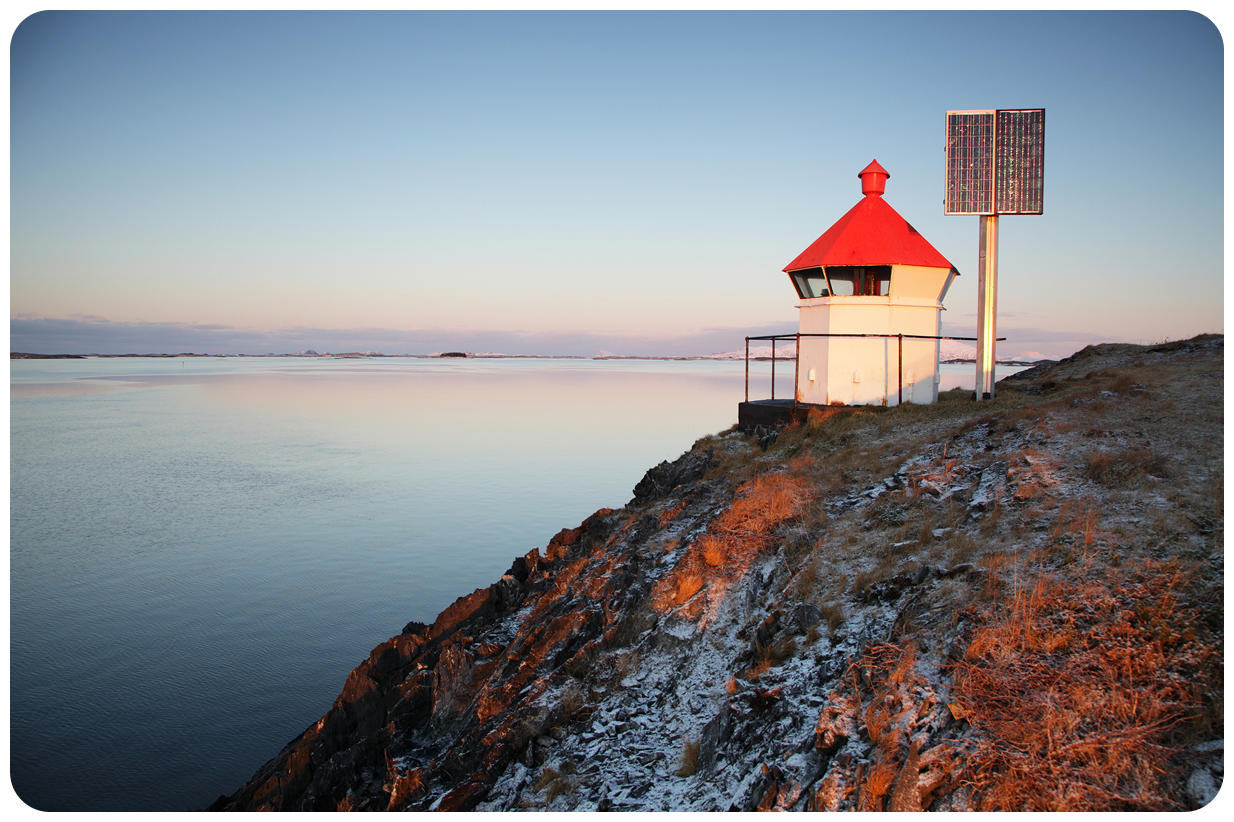
Solar panels powering a lighthouse in Norway
Why does the UK keep getting hit so hard by global energy crises?
Because we're heavily dependent on gas, which is a global commodity. When supply is disrupted anywhere in the world, prices spike everywhere — including here. We saw it when Russia invaded Ukraine in 2022. We're seeing it again now.
Norway is a useful comparison — they've invested heavily in renewables, electrified their heating and transport, and reformed their electricity markets so cheap clean power actually reaches consumers. While global shocks routinely send UK power prices soaring, Norwegian consumers are structurally shielded from the chaos. The difference is gas dependency.
So what's the solution?
There's no single fix, but there's a clear direction:
Reduce how much gas we need. More wind, solar and heat pumps gets us closer to self-sufficiency and less exposed to global shocks. The technology is ready and getting cheaper every year.
Reform our electricity markets so that cheap renewable power actually brings bills down. Right now, even green electricity is priced according to gas costs, and because the grid can’t always move power from where it’s generated to where it’s needed, we actually pay wind farms to turn off and gas plants to replace them. That wasted wind cost nearly £1.5 billion last year alone. Effectively, it’s a market design problem, not an energy problem, and it's solvable.
Use domestic North Sea gas while we still need it, rather than importing it from regions vulnerable to conflict. This isn’t a silver bullet, and it won't bring prices down overnight, but it makes more sense than shipping gas from the other side of the world. The government took a step towards this in October 2026 with its approval of the Jackdaw gas field.
Get on with nuclear, but do it efficiently. New plants are at least a decade away and government funding needs to be carefully managed. It's a long-term piece of the puzzle, not a short-term fix.
Are you saying fossil fuels are the answer?
Absolutely not. The long term fix is building more wind and solar, switching homes off gas boilers and on to heat pumps, and reforming the way our electricity market works so that clean, cheap power actually drives down people’s bills. That's what gets Britain off the gas dependency that makes these crises so damaging.
Greg's position on the North Sea is a pragmatic short-term argument: while we still need gas, it makes more sense to use what we have at home than to import it from regions vulnerable to conflict. He explains his ideas in detail in this interview with The Times. Let’s be clear - it’s been 20 years since the North Sea could meet all our needs and it won’t bring prices down overnight. It’s a bridge while we build the real solution, not a destination in itself.
What about fracking?
We don’t think fracking is a meaningful solution for the UK. Our geology is denser and less productive than the US, and any extraction wouldn't make a significant contribution to our gas demand. And beyond the practicalities, the environmental case against it is well documented — the risks to local water supplies, soil and communities are very real concerns. It's not a road we'd want to go down even if the economics stacked up.
So when does this get better?
The technology is there. Renewables are cheaper than gas. Batteries cost a tenth of what they did ten years ago. The barrier now is market reform and political will. We can't control what happens in the Strait of Hormuz, but we can control how exposed we are when it does.
That's what “energy security” actually means.
What is Octopus actually doing about this — are you just talking about it?
We're one of Europe's largest renewable energy investors, with 5.7 GW of wind and solar projects worth £8.5 billion globally and £2 billion committed to new UK clean energy by 2030. We manufacture our own Cosy heat pump to make green heating affordable, and we've already built the UK's first zero-bills community — 113 homes in Essex with solar, heat pumps and a shared battery, with no energy bills guaranteed for ten years.
We’re also pushing hard for the market reforms that would actually fix this — we publicly campaigned for zonal pricing, which would save consumers at least £2 billion a year and break the link between gas and electricity prices so global crises stop hitting British households so hard. The government has rejected this idea, but we still think that increased flexibility across different regions would help enormously.
We already know gas isn't the long-term answer. Everything we build points in the other direction.
Updated on

Mario Lupori
Chief Financial Officer
Published on 4th March 2026