Energy prices from July 2026, and what they mean for you
Energy prices are going up: The average typical dual-fuel energy bill will go up around 13% from July 1st.
Wholesale gas prices are the main driver: Ongoing tensions in the Middle East have caused wholesale prices to jump and this has fed through to prices.
Summer may blunt the impact because we naturally tend to use less energy in warmer months – in fact, a typical dual fuel customer will actually spend around £15 less a month from July-September.
Octopus remains the only large supplier to have never charged the full Ofgem price cap.
Summary of changes
You can see the previous price change blog for April 2026 here.
From July 1, energy prices are rising
The Ofgem price cap will climb by 13.5% (pushing a typical, medium-sized home’s bill for gas and electricity up £221 to £1,862 on average).
This is largely because wholesale gas prices have soared as conflict rumbles on in the Middle East. Read more about the war's impact on energy prices.
However, this cap only runs through July, August and September. Because we naturally tend to use less energy in warmer months, there's a chance you may not feel the impact of price rises on your bills.
We remain the only large supplier to have never charged the full Ofgem price cap for our flexible tariff.
Good to know: if you're not paying by Direct Debit, you could save £131 on average by setting one up with us. It's super quick and easy to get set up in your online account.
If you ever find yourself struggling to pay we have lots of support on offer.
Frequently Asked Questions
General
Your prices are not affected by changes to the price cap and will remain fixed until the end of your contract. You can check your end date on your online account (scroll down and look at the details below your property address).
We’ll always email you in advance of your fixed tariff coming to an end.
If you’re on a variable tariff, like our Flexible Octopus, the Ofgem Price Cap protects the price you pay.
The price cap specifically applies to variable tariffs because they aren’t fixed against the volatility in the energy markets. Different suppliers can refer to these tariffs in a number of ways; standard variable tariff (SVT), non-fixed, etc. At Octopus our variable energy tariff is called Flexible Octopus.
If you’d like to confirm which tariff you're on, and details like your current prices and contract dates, you can see them on your online account (scroll a little way down and look at the details below your property address).
You can read more about the energy price cap and whether it affects you on Ofgem’s website.
No: this figure is not the absolute maximum a customer could pay.
If you’re affected by the price cap, the protection you receive is relative to how much energy you use.
Ofgem calculates the price cap based on the yearly usage of a typical medium consumption home. They have just revised these figures down because they believe customers are using less energy, but we have continued to use the previous figures of 2,700 kWh of electricity and 11,500 kWh gas per year so that this article is comparing apples to apples. The new figures are 2,500 kWh of electricity and 9,500 kWh gas.
The price cap represents the maximum amount Ofgem considers fair for energy suppliers to charge customers on variable tariffs.
This figure is used by suppliers to apply the price caps protection against each customer's actual usage. Put simply: if you use more - or less - energy than that typical home, your own yearly energy costs on a tariff priced at the maximum rates may be higher - or lower - than the annual figure from Ofgem.
Payments
Our Flexible tariff will have slightly different unit rates and standing charges based on your payment method. It's not a flat discount for Direct Debit customers (or a charge on non-Direct Debit customers) – it’s the typical savings an average home could see over a year on the cheaper Direct Debit dual-fuel rates.
If you change how you pay, our system will pick that up and adjust your rates automatically, so if you don’t have a Direct Debit right now, it’s super easy to access the cheapest prices. All you need to do is set up a Direct Debit online and we’ll do the rest.
Not having a Direct Debit creates us significantly more admin.
We don't think it's fair to make everyone cover that extra cost, so we do offer a cheaper rate for those who choose to pay by Direct Debit, which costs us less to manage.
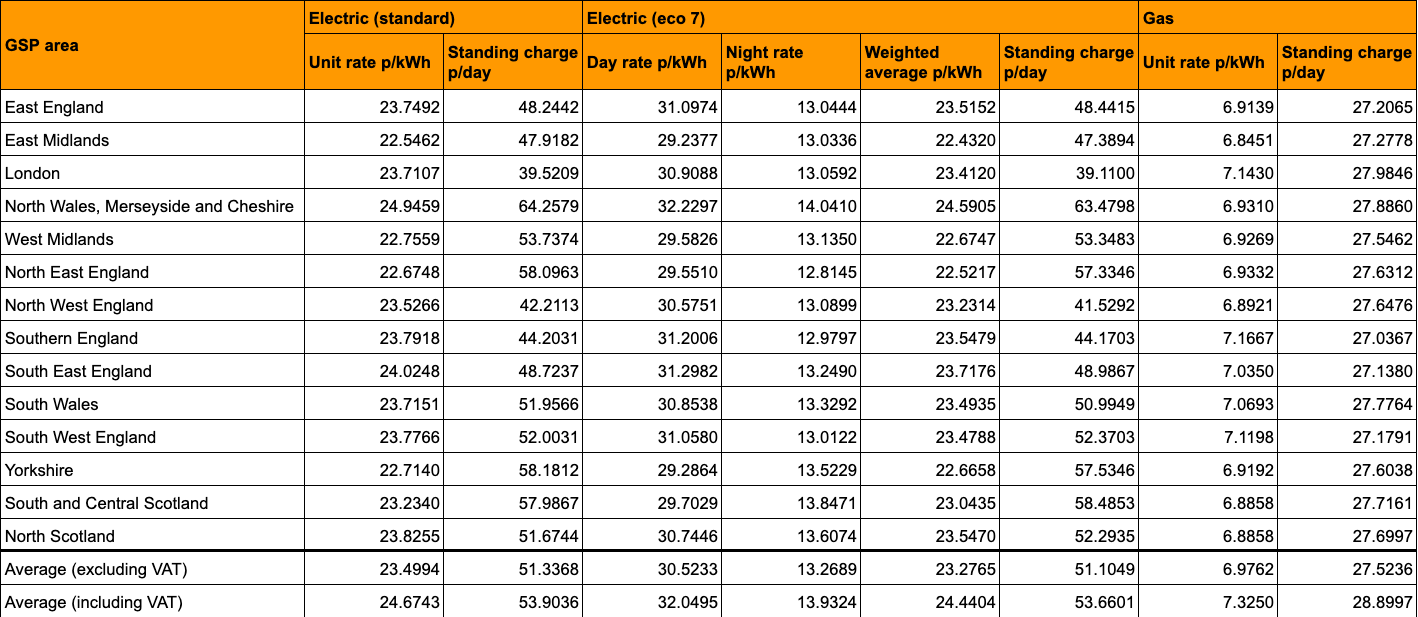
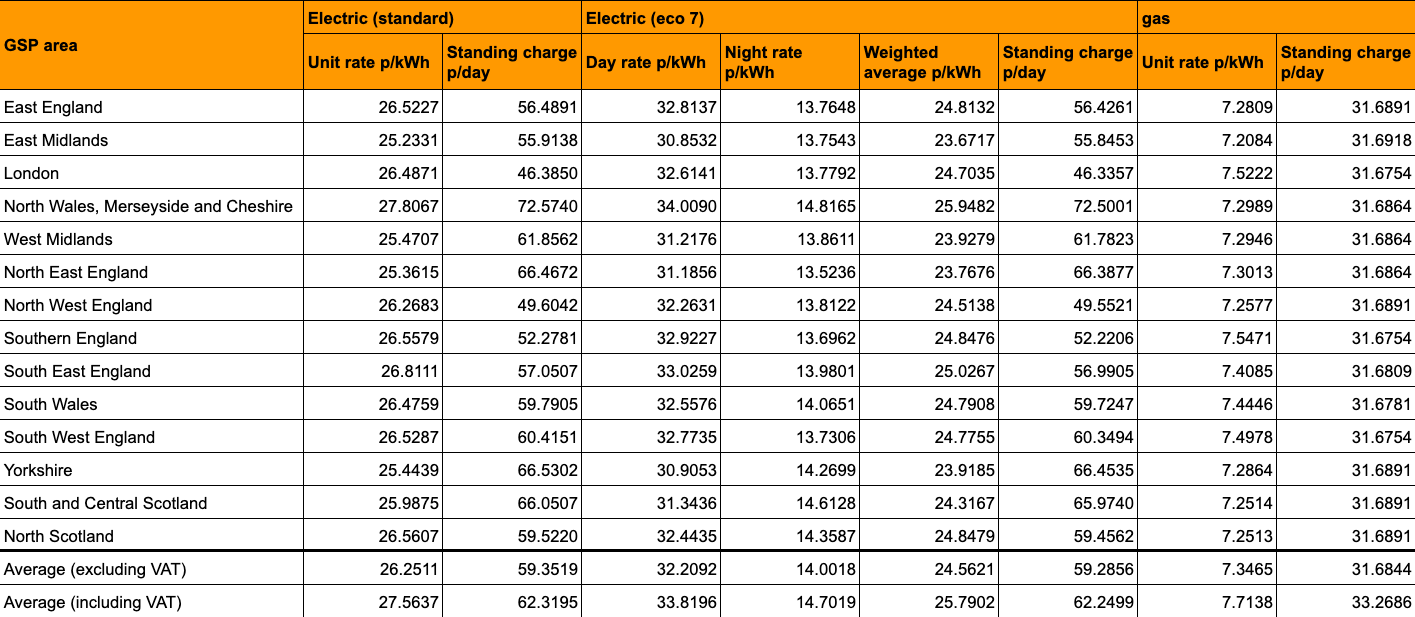
Your energy prices depend on where you live and how you choose to pay. Below is a breakdown of all Flexible Octopus rates and charges by region and payment method.
Flexible Octopus prices for customers who pay by Direct Debit
Flexible Octopus prices for customers who pay by other methods (eg Standard Credit)
It costs us more to supply energy to some areas depending on things like proximity to generators, cost of maintaining local networks and more.
The same is true with different payment methods – for example, it costs suppliers more to administer and manage accounts that don't pay by Direct Debit, so Ofgem factors that into their Price Cap.
The price cap sets a maximum rate for:
Energy units: the price suppliers can charge variable tariff customers per unit of gas and electricity you use
Daily standing charges: the price suppliers can charge per day for ongoing costs, like paying the companies who manage distribution networks, operating costs, etc.
Ofgem have shared that on average - for customers paying by direct debit - the unit rates (inc. VAT) will be:
Electric:
26.11 pence per kWh
57.19 pence daily standing charge
Gas:
7.33 pence per kWh
29.04 pence daily standing charge
Important: these are averaged figures from across all regions in the UK. As certain costs vary, e.g. what transmission network fees we pay in an area, the actual maximum unit rate varies depending on region. There are other factors too: different maximum rates for Economy 7 tariffs (which have a day and a night price) and prepayment meters.
You can see Ofgem's figures on the price cap standing charges and unit rates here.
Fixed Tariffs
We can't really say whether it would be the best choice for you; it's best to compare rates for your area online and see if it would save you money.
If you’re on a fixed tariff, the first thing to know is that the price cap doesn’t affect your current energy contract.
We’ll always email you in advance of your fixed tariff coming to an end.
If you’d like to confirm your current prices and contract dates, you can see them on your online account (scroll a little way down and look at the details below your property address) or on any PDF energy statement. It’s usually on the second page, near the top of the breakdown for your electricity and / or gas charges for the period.
Published on

Joe Richardson
Operations Director