Everything you need to know about meter certification

Most meters are assigned a certification date when they're manufactured. Once a meter has passed its certification date, it needs to be replaced.
Replacing your meter allows you to make sure that the energy you use is always measured accurately, and that you'll only pay for what you use.
What is meter certification?
Just as smoke alarms need to be replaced after a certain number of years to stay in perfect working order, electricity meters also have a limited lifespan.
To get certified, a meter undergoes rigorous testing to make sure that it works accurately and reliably. It's then given a ‘certification date’ set by the Office for Product Safety and Standards (OPSS).
When the meter reaches its certification date (the end of its working life), it needs to be replaced.
Why do we need to replace your uncertified meter?
We’re required to by law, under the Electricity Act 1989.
Meters are tested and certified to ensure they’re working correctly, but their certification only lasts a set number of years. After that, we need to replace the meter. We’ll replace it with a smart meter.
Why are we replacing non-smart (traditional) meters with smart ones?
The Office of Gas and Electricity Markets (Ofgem) wants energy suppliers to take all reasonable steps to install smart meters for new connections and replacement meters at domestic and non-domestic premises.
We install smart meters because traditional meters are no longer being manufactured or refurbished.
We're installing the latest generation of smart meters, also known as SMETS2.
These smart meters play a crucial role in helping to create a greener energy system. If you have both gas and electricity meters that need upgrading, we’ll take care of both in the same visit.
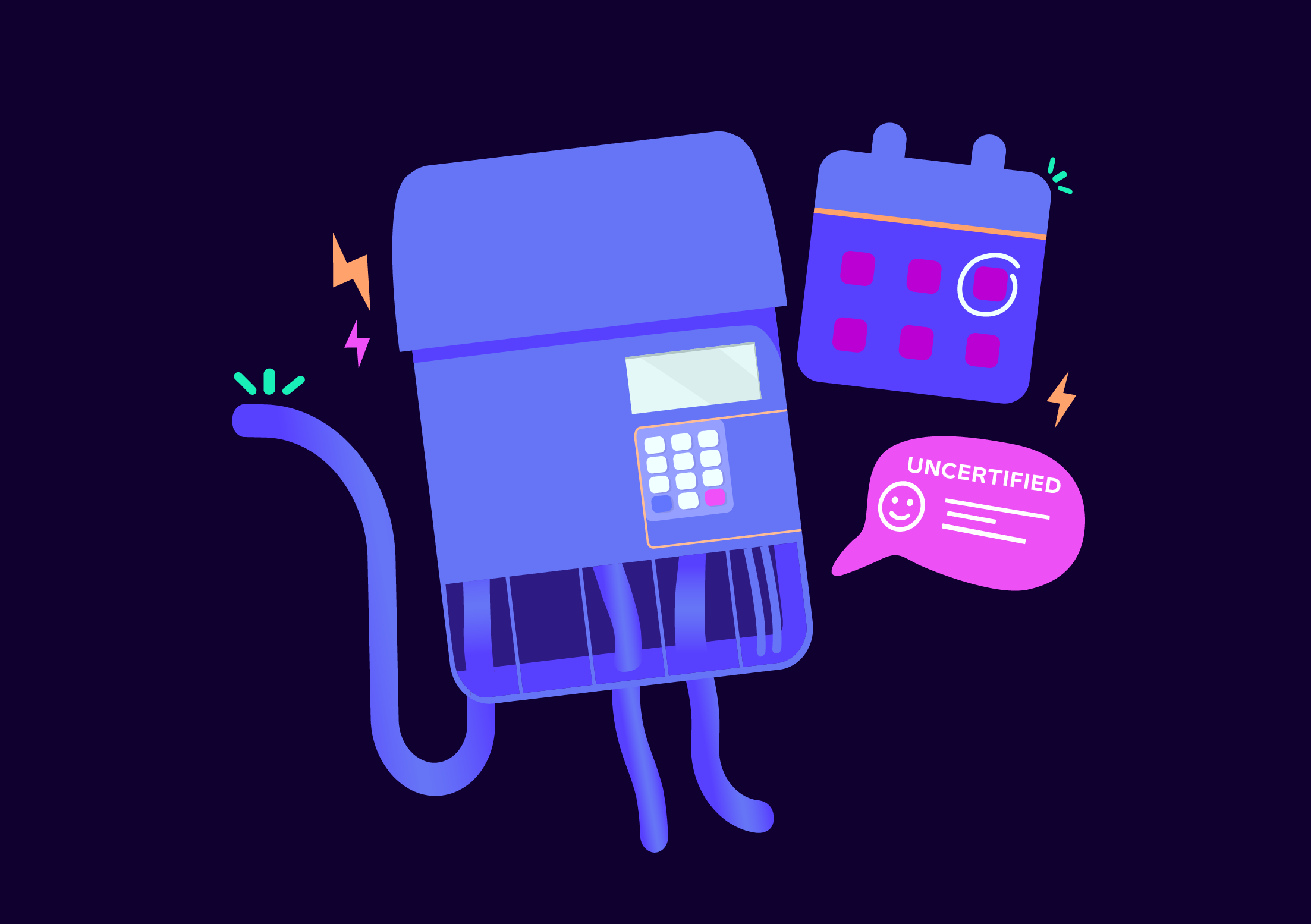
These smart meters play a crucial role in helping to create a greener energy system. We're big fans.
What's so great about smart meters?
Smart meters show how energy’s being used in near real-time – helping you get accurate bills, track your usage easily, and earn rewards for using energy during greener or lower-cost times.
They also help us run things more efficiently, saving money we can pass back to you.
Plus, with a smart meter, you can:

Earn money back on your bills by joining Octoplus – our exclusive rewards programme for smart meter customers.
Claim up to £300 worth of rewards, and play our Monday Scratchcard for a chance to win weekly prizes!

Get clever energy insights in the Octopus Energy app to help change costly habits and cut your usage.

Check out our smart tariffs, which offer lower rates during greener times of day.
Pair smart home tech to get cheaper overnight EV charging, export energy back to the grid, and stay toasty by linking up your heating system.
 Ready to ditch your outdated meter?
You can book an appointment directly in your Octopus Account.
No suitable slots available? Simply add yourself to our priority waitlist, and we'll let you know as soon as we have new appointments in your area. (Top tip: we usually release new slots every Monday.)
Don't have your diary handy?
Register your interest here, and we’ll contact you as soon as slots become available near you.
 Get Certified, Get Lucky: Your Meter Could Win You £100
We’re on a mission to upgrade uncertified meters. Because who doesn't love spot-on readings and bills that are just right? Plus, we believe that you should only ever pay for what you genuinely use.
And here's where it gets exciting: when your meter gets its shiny new upgrade, you're instantly in our weekly £100 draw. That's right! Just for getting the best meter on the block, you could pocket a crisp £100 credit.
If Lady Luck smiles your way, we'll shout out the good news and drop that £100 straight into your account. Easy!
FAQs
Yes, if your meter has passed its certification date, we’re required to replace it under the Electricity Act 1989, which is a governmental regulation.
Simply click the booking link in the email notifying you that your meter needs to be replaced, and select a date and time that suits you.
Don't have the email handy? Not to worry – you can also book your smart meter appointment in your Octopus account.
Once booked, the installation couldn't be easier. Our friendly engineer will be with you for approximately one hour per fuel, and if you have a gas meter, we'll replace it at the same time.
Getting a smart meter won’t cost you anything extra, just like the installation and maintenance of traditional meters – the costs are covered in everyone's energy bills.
In conjunction with the OPSS, suppliers conduct annual service testing, during which we spot-check meters of various types and ages. The results of these checks indicate that some meter certificates can be extended, meaning that the certification date written on the meter when it was first manufactured / installed may not be 100% accurate.
If you'd like us to, we can double-check the certification date for you and book a replacement as soon as possible, if needed.
Want to know more about smart meters and the installation process? Check out what to expect before, during and after your smart meter installation.
And if you're still unsure, we've busted the most common smart meter myths to help clear up any confusion.
Published on

Rebecca Gillespie
Product and Marketing Delivery Lead