Govt boosts heat pump grant to £9,000 for oil and LPG homes. Learn more

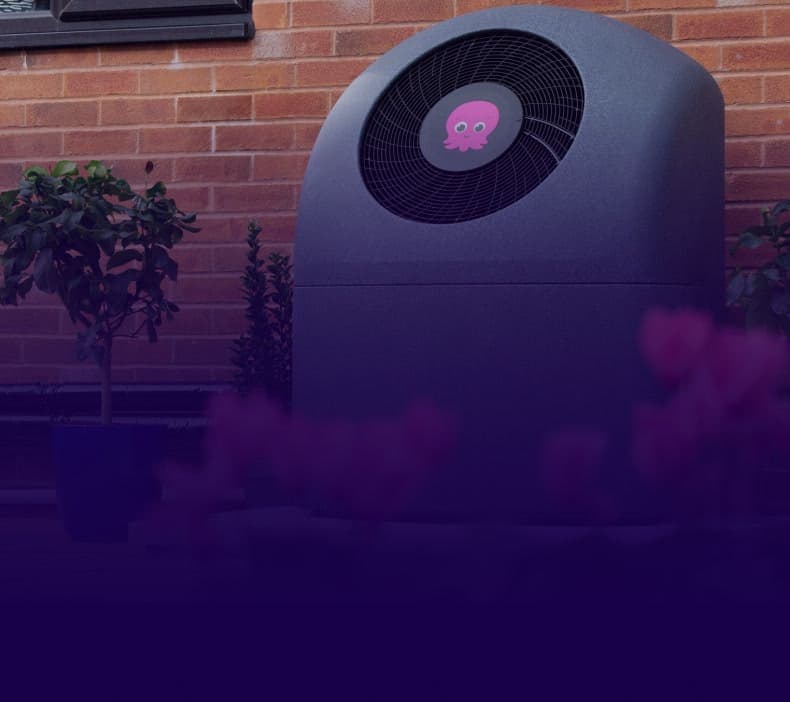
Cosy, green & cost effective heat pumps
Upgrade to the Cosy heat pump - the smart choice for greener, cheaper heating. Save £9,000 with a government grant (check eligibility), and get a free 8-year warranty.
Upgrade to the Cosy heat pump - the smart choice for greener, cheaper heating. Save £9,000 with a government grant (check eligibility), and get a free 8-year warranty.
Introducing the Cosy heat pump
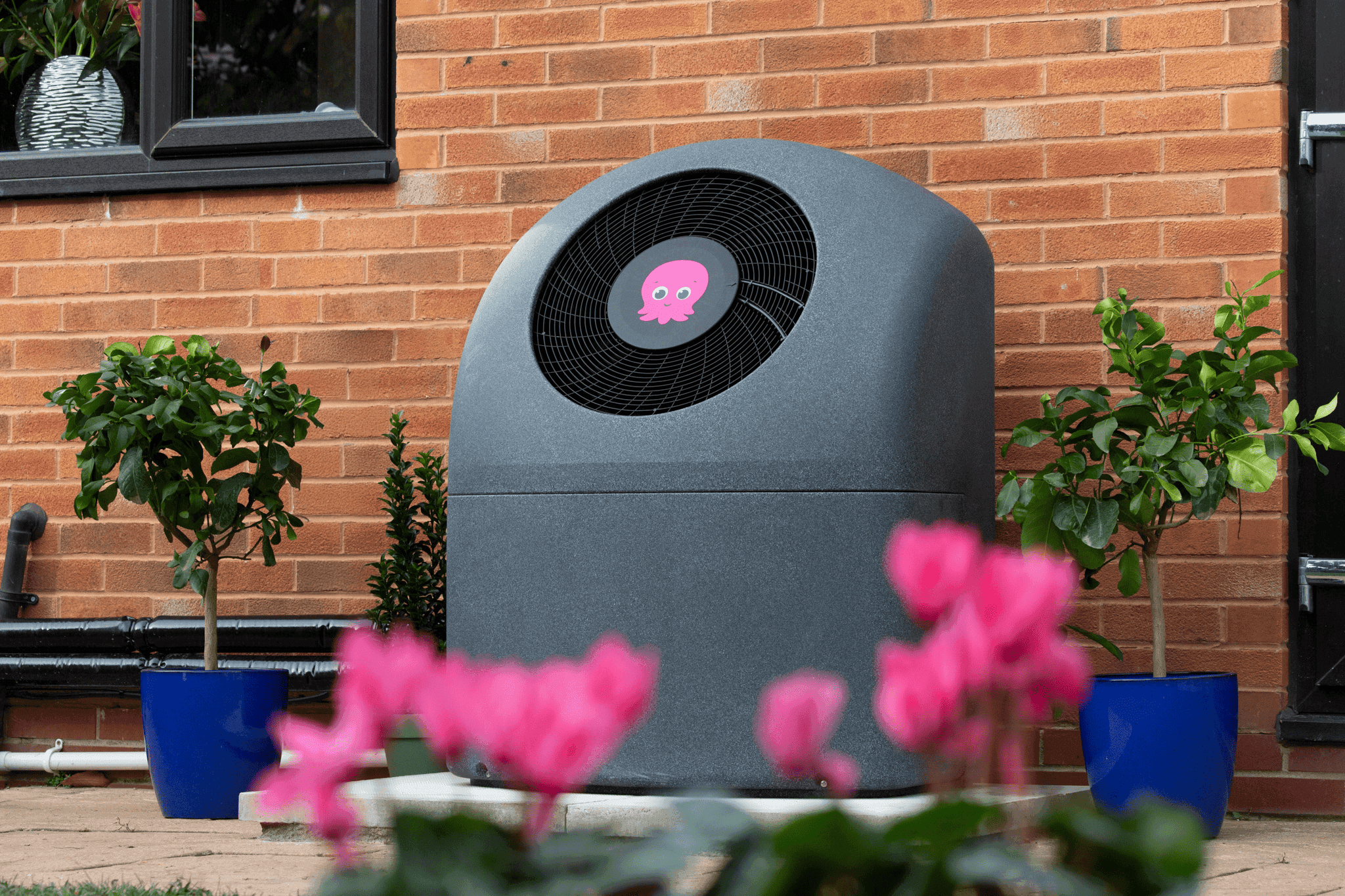
Easy to control, cheaper to run.
Manage your home heating from anywhere with the Octopus app. Customers on our Cosy Octopus tariff saved an average of £224 last year compared to using a gas boiler running at 85% efficiency on our standard variable tariff.
Top-tier tech.
Highly-insulated hot water cylinders, eco-friendly refrigerant, and Cosy Pods that fine tune temperature and humidity.
A heat pump that gets smarter.
Cosy isn't like most heat pumps: it's unique. Just like your smart phone, Cosy gets regular software updates and exciting new features - no matter how long you've had it. Find out more about what makes Cosy great.


The heat pump is a game changer.
With gas, we had to switch the heating on and off frequently to save energy. The Cosy keeps the house consistently warm without needing constant adjustments.
Luis, Cosy Heat Pump owner
(or allow optional cookies to see it right here 👀)
Next steps to cosy living
With £9,000 off the installation cost for eligible homes with the Boiler Upgrade Scheme and flexible ways to pay, there's never been a better time to switch.

1. Explore costs
Pop in your postcode and give us a few details about your home.

2. In-home survey
One of our heat pump specialists will take some measurements and design your new heating system.

3. Design and install
We'll send a detailed plan for design and install - then get ready for greener, cheaper energy!
Why choose Octopus?
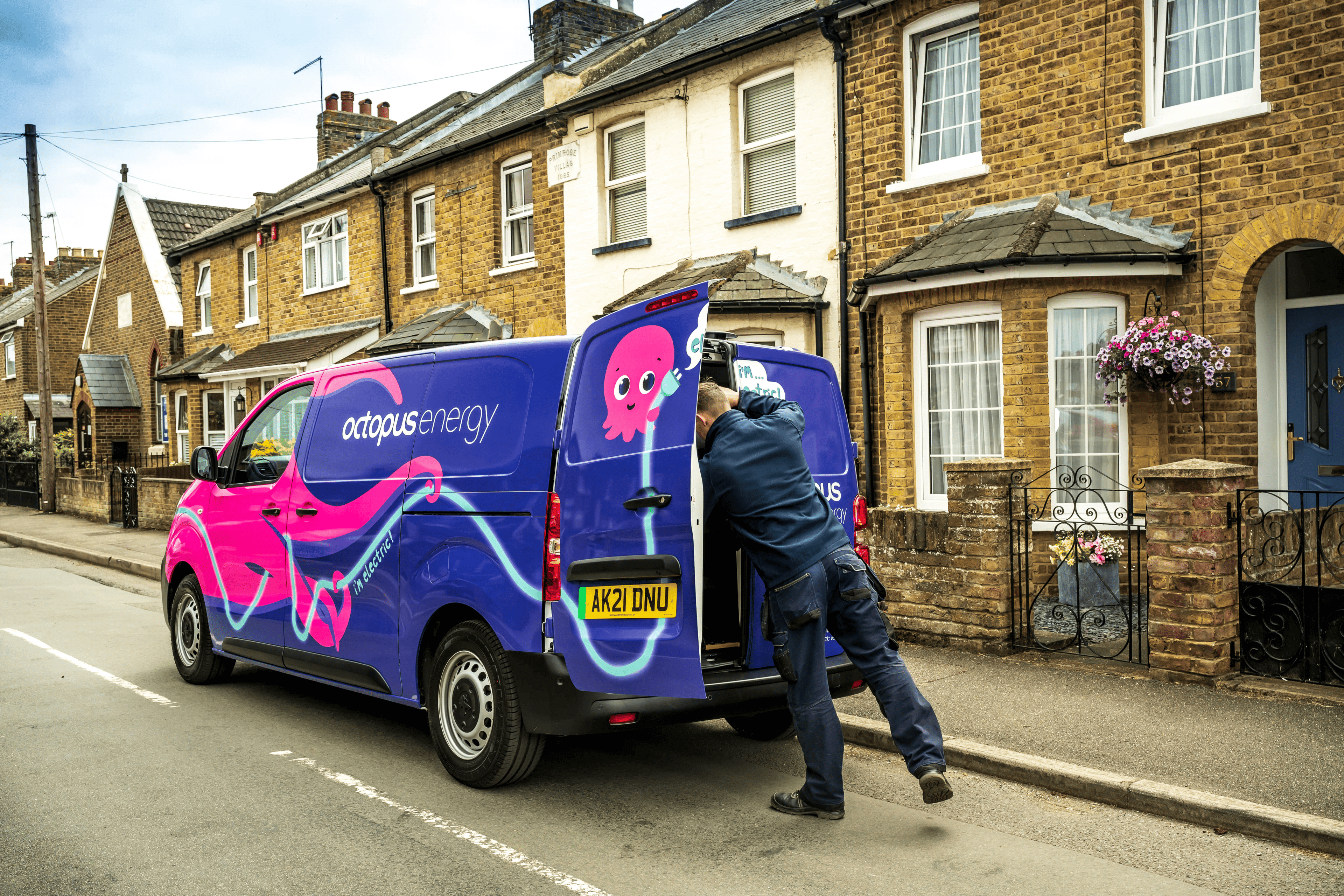
We manage it all,
from design to install
Radiator upgrades, pipes, electric work: all sorted with no third parties involved.

Expert tech for
hassle-free heating
Control heating in the Octopus app, and get new features with Cosy software upgrades.

All your support and
aftercare covered
An 8-year product guarantee for ultimate peace of mind, plus support 7 days a week.
Explore more on heat pumps

How much does a heat pump cost to run?

Discover more Octopus smart home tech

One stop shop for all things heat pump
Got questions about heat pumps?
Everything you were wondering about, explained properly.
There are strict regulations on how loud a heat pump can be - around 40-60 decibels. That's roughly the same as a fridge-freezer or a gas boiler, and because it lives outside, the sound shouldn't be too noticeable for most people.
If you'd like to test how loud your new heat pump will be in the space you think it will be installed, we've put together some simple steps to test the noise level:
- Download a decibel meter app on your phone. We recommend Decibel X (it's free, accurate, and very easy to use).
- Head outside to the exact spot where you think your heat pump will be installed.
- Open the app on your phone so it starts measuring the live background noise of your garden.
- Play our Heat pump sound demo video on a separate device (like a laptop or tablet) brought out to that spot.
- While watching the decibel reader on your phone screen, turn the volume buttons on your laptop or tablet up or down until the app stays steady right around 62 decibels (dB). This matches the noise rating for our largest heat pump model (smaller models are even quieter!)
Average sound level by heat pump model:
- EDLA04: 58 dBA
- EDLA06: 60 dBA
- EDLA08: 62 dBA
- EDL09-16: 62 dBA
Note: You can see how loud the heat pump will be for your neighbours. For most councils in the UK, you'll need to apply for planning permission if the sound exceeds 45dB at their window.
Keep in mind: This is a quick real-world test, but official MCS noise ratings are calculated using perfect laboratory conditions. In everyday life, actual noise levels can vary depending on nearby surfaces for sound to bounce off or environmental factors. Your heat pump might sound a bit louder during a winter defrost cycle, or practically silent when it's just ticking along on a mild day.
The outside unit of a heat pump is roughly 1m x 1m x 2m (about the size of a moped). It needs around a metre of clear space in front and to each side to breathe properly.
Inside, you will need space for a hot water tank - roughly 2m x 1m x 1m (the size of a modern fridge-freezer), located on the ground or first floor of your home (the closer to the outside unit, the better).
The cylinder can also be installed in a garage, outdoors in a purpose-built store, or in the loft, though this may slightly decrease efficiency if exposed to winter cold. New space-saving technology is being developed all the time, so expect these footprints to come down considerably in the future!
Most heat pumps can be fitted under "permitted development," meaning planning permission is not required.
However, advice or planning permission must be sought from your Local Planning Authority (LPA) if:
- The proposed location does not pass a noise assessment (e.g., it is too close to a neighbour's window).
- Your property is located within a World Heritage Site, a conservation area, or is a Listed Building.
We will inform you after your home survey if your installation requires planning permission. While we cannot submit applications on your behalf, we'll guide you through it. LPAs typically charge around £347 to submit a planning application, but a successful application allows us to claim the government grant on your behalf.
Cosy heat pump customers on the Cosy Octopus tariff saved an average of £224 last year compared to using a gas boiler running at 85% efficiency on our standard variable tariff
This figure is based on the actual energy consumption of all Cosy heat pump customers on a Cosy Octopus tariff between 1 July 2025 and 1 July 2026, using tariff rates at the time.
We compared this to the cost of producing the same amount of heat with a gas boiler operating at 85% efficiency, priced using our Flexible Octopus (standard variable) tariff at the same time.
Savings from gas standing charges were included only for customers who had fully removed their gas supply (less than 3% of customers). Actual savings vary depending on system design, tariff choice, home insulation, and energy use.
Our typical heat pump price is £4,459, which is lower than the national average of £5,600
This is the median post-survey price from all of our heat pump quotes after the £7,500 Boiler Upgrade Scheme has been applied, between 01/09/2025 and 28/02/2026. The national average is taken from the Boiler Upgrade Scheme statistics: April 2026 – median cost of installation Q4 2025.
Cut carbon emissions by 82% with a heat pump
This is the typical reduction in heating carbon emissions using an electric powered heat pump compared to a gas boiler.
The carbon breakdown
- Gas CO2 (tonnes per year) - 2.42
- Electricity CO2 (tonnes per year) - 0.43
- Carbon saving (tonnes per year) - 1.99
Data sources and assumptions
- Gas Energy Usage (kWh) 11500 (Ofgem medium use gas usage (Jun 2026))
- Heat Pump Efficiency 312% (typical seasonal coefficient of performance from a fleet of Octopus high temperature heat pumps)
- Gas Boiler Efficiency 85% (The typical gas boiler efficiency from a BEIS study)
- Gas fuel emissions of (gCO2/kWh) 210 (SAP 10.2)
- Electricity fuel emissions of (gCO2/kWh) 136 (SAP 10.2)
Based on these sources, heat pumps typically produce lower operational emissions when heating the home than gas boilers.
For more information, explore our Octopus Cosy heat pump fleet performance dashboard.
We're the largest heat pump installer on the Boiler Upgrade Scheme
Based on Octopus benchmarking against Ofgem reports from 2024 and we've continued to grow since.
Our customers love their heat pumps!
- 93% of people say it's the same or more comfortable than their previous boiler
- 87% say it costs the same to run or less
- 83% say it's the same noise or less than the previous boiler
- 90% say it's just as easy or easier to maintain
We survey all our heat pump customers 3 months post-installation to see how they find their heat pump compared to their previous gas boiler. Survey results are taken from a sample of 2,837 customers:
- Comfort: 93% of people say it is the same or more comfortable than their previous boiler.
- Running Costs: 87% say it costs the same to run or less.
- Noise: 83% say it is the same noise or less than the previous boiler.
- Maintenance: 90% say it is just as easy or easier to maintain.
A heat pump is around 4x more efficient than a gas boiler
Heat pumps don't generate heat by burning fuel. Instead, they transfer existing heat into your home. This means they can deliver multiple units of heat for each unit of electricity used.
Based on performance data from a fleet of installed Octopus Cosy heat pumps, typical real-world seasonal performance (SPF or SCOP) is around 3.6. This means around 3–4 kWh of heat is delivered for every 1 kWh of electricity used (an effective efficiency of 300–400%). By comparison, typical UK domestic gas boilers operate at around 85% efficiency, delivering approximately 0.85 kWh of heat per 1 kWh of gas used. On this basis, a heat pump can be around 4× more efficient than a typical gas boiler.
All our heat pumps are independently tested by the Building Research Establishment (BRE), with SCOP values published on the Microgeneration Certification Scheme (MCS) product database. Actual efficiency will vary depending on the property, system design, and usage. For more information, explore our Octopus Cosy heat pump fleet performance dashboard.
The UK's most awarded energy supplier
We've won more awards for customer service more awards for customer service than anyone else.
Heat pumps give reliable, consistent heating and hot water
The heat pump user survey report by Nesta from May 2023 summarises that "users are highly satisfied with their heat pumps". It states: "People living in England, Scotland and Wales who own their home and use a heat pump to heat it are satisfied that heat pumps are safe, reliable, quiet heat sources that are effective for space heating and producing hot water." Find the full report here.
The Cosy heat pump is quiet
Heat pump sound power levels are verified by an independent, third-party laboratory as part of the testing process for inclusion on the MCS product database. The laboratory verifies the sound power on the A-weighted decibel curve, as A-weighting closely aligns to how humans perceive "loudness".
All heat pumps are measured using EN14511 standards to ensure uniformity across manufacturers and models. Our Cosy 6 heat pump has a verified sound power level lower than many other heat pumps of the same capacity.
Heat pump heating makes the air healthier in your home
Homes with a heat pump emit far less harmful nitrous oxide (NOx) emissions than those with gas boilers and cookers, significantly reducing asthma and other respiratory illnesses. According to the Sustainable Markets Initiative Cleantech Homes report.
A heat pump can add thousands to your property value
Analysis by the Department of Land Economy at the University of Cambridge suggests a 16% value uplift for new-build homes with enough solar and battery storage to eliminate energy bills. A further study of over five million existing properties indicates a 2-3% value increase for existing homes with solar panels or heat pumps (versus like-for-like gas-heated homes), according to the Sustainable Markets Initiative: Cleantech Homes report, 2024.
As of April 2025, the average house price in the UK is £265,497 according to the Land Registry. Therefore, a 2-3% value increase for an average house priced at £265,497 would be between £5,310 and £7,965.
Heat pumps typically last longer than gas boilers
The expected lifespan of a typical gas boiler is 10–15 years. A heat pump typically has a lifespan of 15–20 years, with UK government research indicating an average of around 20 years. Manufacturer Daikin reports similar ranges. Actual lifespan depends on factors such as installation quality, maintenance, usage patterns, and operating conditions.
Interested in heat pump installation?
Call us: 0808 196 6842
Email: heat@octopus.energy
(Our phone lines are open 9am - 5pm Monday to Thursday, and 9am - 4pm Friday)
Need support after installation?
Call us: 0808 196 6842
Email: aftercare@octopus.energy
Our aftercare phone lines are open 9am – 5pm Monday to Thursday & 9am - 4pm Friday
Have a complaint about your installation?
For the fastest response, fill out this form to raise any issues. Alternatively, you can email us on aftercare@octopus.energy or call 0808 196 6842.
Check out our full complaints procedure.





Heat pump installation terms and conditions
Public liability insurance provider: QBE UK Limited.
Indemnity Limit: £10 million
Octopus Energy Services Ltd VAT number: 358672751