
Energy bills slashed by 40%: huge new report says accelerate Cleantech home building
We're thrilled to announce that some of the UK's top businesses are coming together under the Sustainable Markets Initiative (SMI) to speed up the creation of cleantech homes across the UK. Together, we're dedicated to bringing the benefits of green tech to millions of customers and driving the transition to net zero.
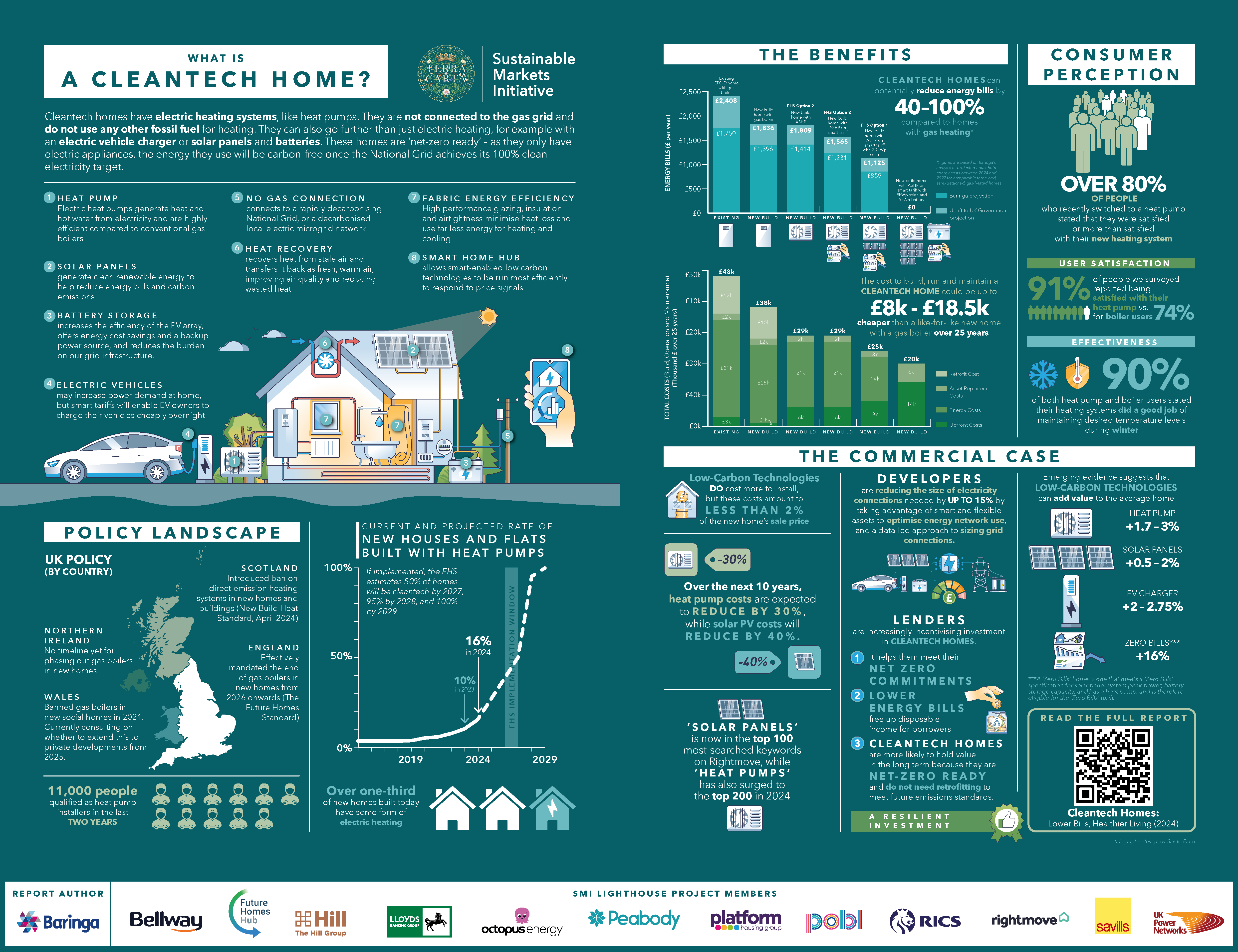
Cleantech homes can slash energy bills by 40% - 100% and increase property values by 16%
Consumers are overwhelmingly satisfied with clean technologies (91% of people are satisfied with their heat pumps)
Some of the UKs biggest businesses are making vital commitments to accelerate the roll out of clean tech homes
We urge the government to set an end date for phasing out gas boilers in new builds as quickly as possible, to remove green taxes from electricity bills, and support retraining for low-carbon tech installation and maintenance.
Download the report from the Sustainable Markets Initiative:
Our report, "Cleantech Homes: Lower Bills, Healthier Living," provides a blueprint for building greener, more affordable homes across Britain. We've shed light on the many financial perks for homeowners and developers, the rising demand for low-carbon technologies, and the progress in training and grid connections. To top it all off, together we've put our money where our mouth is – our members have made significant commitments to ramp up the roll-out of cleantech homes.
So what makes clean tech homes such a game-changer?
Imagine homes equipped with green heating (heat pumps), solar panels, and batteries, all working together to slash your energy bills and create healthier living spaces. Cleantech homes can cutting your energy bills by 40% - 100%, and improve your property's value by up to 16%! And it's not just about savings; it's about living better. Cleantech homes eliminate harmful nitrous oxide (NOx) emissions from gas boilers and cookers, significantly reducing asthma and other respiratory illnesses.
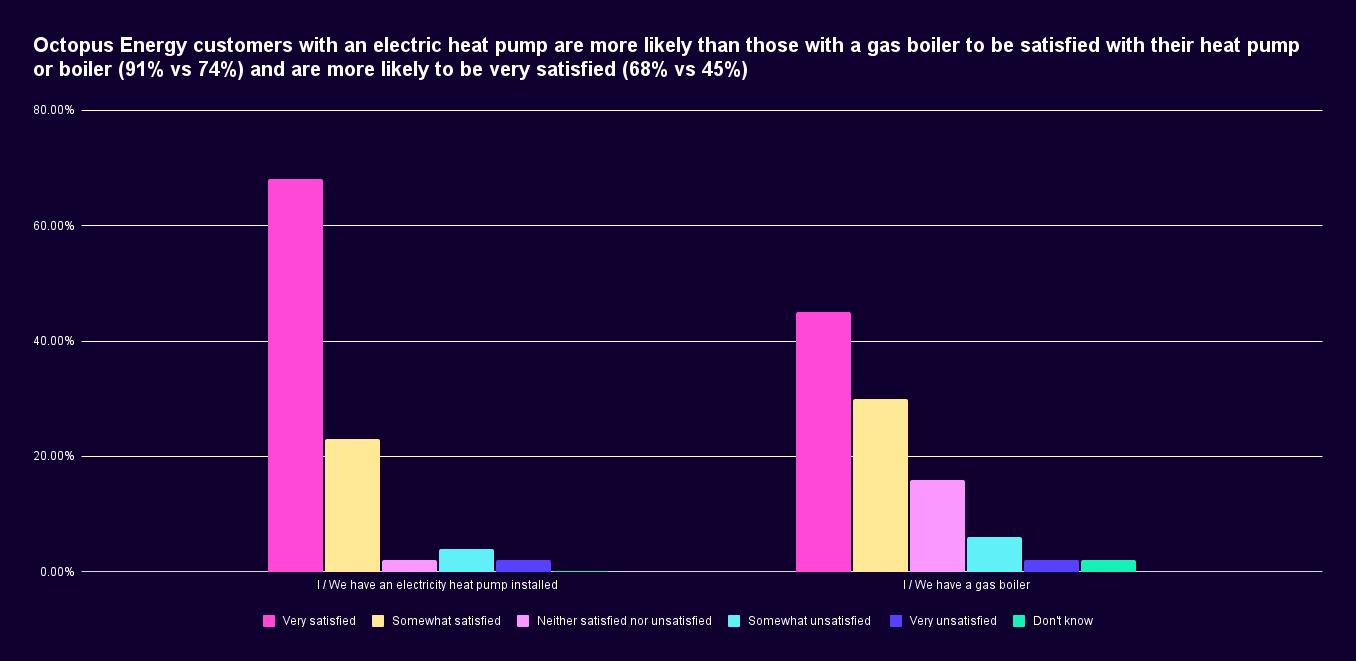
Despite common misinformation, over 91% of people with a heat pump are satisfied or highly satisfied with their heat pumps, compared to only 74% of people with a gas boiler. Interest in low-carbon technology in homes is increasing rapidly: in 2024, properties with heat pumps are the 158th most popular search on rightmove, up from over 1,000 in 2020.
The industry is already making significant progress, with 18% of new homes now featuring heat pumps and over 11,000 heat pump engineers trained in the last two years. The advantages clean tech homes unlock are clear for the housing sector too. Developers can benefit from a price premium and cleantech property sales, and lenders can hit their net-zero targets more effectively.
The businesses who put this report together have all made comprehensive pledges to help accelerate the transition, for example the Hill Group have committed to stop installing gas boilers this year, Rightmove will help promote heat pumps in listings, and UK Power Networks will make it easier to connect Cleantech homes to the grid.
However, to meet Net Zero targets, rapid acceleration has never been more important.
Coming together to make big bills a thing of the past
The report's launch event, hosted by TV personality Kevin McCloud, took place at Kew Bridge Rise, a Hill Group housing development showcasing a mix of affordable, shared, and private ownership properties equipped with solar panels, heat pumps, and over 20 EV charging points.
This collaborative effort, developed with leading UK property and mortgage experts such as Baringa, Rightmove, Lloyds, Bellway, Hill Group, Savills, aims to reshape the future of housing. Greg Jackson, our founder, states, “Homes with heat pumps, solar panels, and batteries can make big bills a thing of the past. Sometimes we can eliminate power bills completely.”
We're ready to collaborate to turbocharge the UK's shift to clean-tech homes. By mobilising the private sector, boosting the retrofit market, educating consumers, and integrating these homes into our energy system, we're determined to help you save on bills and enjoy a healthier lifestyle.


Cosy heat pump customers on the Cosy Octopus tariff saved an average of £205 last year compared to using a gas boiler running at 85% efficiency on our standard variable tariff
This figure is based on the actual energy consumption of all Cosy heat pump customers on a Cosy Octopus tariff between 1 Oct 2025 and 1 Oct 2026 , using tariff rates at the time.
We compared this to the cost of producing the same amount of heat with a gas boiler operating at 85% efficiency, priced using our Flexible Octopus (standard variable) tariff at the same time.
Savings from gas standing charges were included only for customers who had fully removed their gas supply (less than 2% of customers). Actual savings vary depending on system design, tariff choice, home insulation and energy use.
Our typical heat pump price is £4,064, which is lower than the national average of £5,408
This is the median post-survey price from all of our heat pump quotes after the £7,500 Boiler Upgrade Scheme has been applied, between 01/06/2026 and 30/09/2026. The national average is taken from the Boiler Upgrade Scheme statistics: April 2026 – median cost of installation Q3 2026.
Cut carbon emissions by 85% with a heat pump
This is the typical reduction in heating carbon emissions using an electric powered heat pump compared to a gas boiler.
The carbon breakdown
Gas CO2 (tonnes per year) - 2.00
Electricity CO2 (tonnes per year) - 0.31
Carbon saving (tonnes per year) - 1.69
Data sources and assumptions
Gas Energy Usage (kWh) 9500 (Ofgem medium use gas usage (Oct 2026))
Heat Pump Efficiency 312% (typical seasonal coefficient of performance from a fleet of Octopus high temperature heat pumps)
Gas Boiler Efficiency 85% (The typical gas boiler efficiency from a BEIS study)
Gas fuel emissions of (gCO2/kWh) 210 (SAP 10.3)
Electricity fuel emissions of (gCO2/kWh) 119 (SAP 10.3)
Based on these sources, heat pumps typically produce lower operational emissions when heating the home than gas boilers.
For more information, explore our Octopus Cosy heat pump fleet performance dashboard.
We're the largest heat pump installer on the Boiler Upgrade Scheme
Based on Octopus benchmarking against Ofgem reports from 2026, and we've continued to grow since.
Our customers love their heat pumps!
93% of people say it's the same or more comfortable than their previous boiler
87% say it costs the same to run or less
83% say it's the same noise or less than the previous boiler
90% say it's just as easy or easier to maintain
We survey all our heat pump customers 3 months post-installation to see how they find their heat pump compared to their previous gas boiler. Survey results are taken from a sample of 2,837 customers:
Comfort: 93% of people say it is the same or more comfortable than their previous boiler.
Running Costs: 87% say it costs the same to run or less.
Noise: 83% say it is the same noise or less than the previous boiler.
Maintenance: 90% say it is just as easy or easier to maintain.
A heat pump is around 4x more efficient than a gas boiler
Heat pumps don't generate heat by burning fuel. Instead, they transfer existing heat into your home. This means they can deliver multiple units of heat for each unit of electricity used.
Based on performance data from a fleet of installed Octopus Cosy heat pumps, typical real-world seasonal performance (SPF or SCOP) is around 3.6. This means around 3–4 kWh of heat is delivered for every 1 kWh of electricity used (an effective efficiency of 300–400%). By comparison, typical UK domestic gas boilers operate at around 85% efficiency, delivering approximately 0.85 kWh of heat per 1 kWh of gas used. On this basis, a heat pump can be around 4× more efficient than a typical gas boiler.
All our heat pumps are independently tested by the Building Research Establishment (BRE), with SCOP values published on the Microgeneration Certification Scheme (MCS) product database. Actual efficiency will vary depending on the property, system design, and usage. For more information, explore our Octopus Cosy heat pump fleet performance dashboard.
The UK's most awarded energy supplier
We've won more awards for customer service than anyone else.
Heat pumps give reliable, consistent heating and hot water
The heat pump user survey report by Nesta from May 2023 summarises that "users are highly satisfied with their heat pumps". It states: "People living in England, Scotland and Wales who own their home and use a heat pump to heat it are satisfied that heat pumps are safe, reliable, quiet heat sources that are effective for space heating and producing hot water." Find the full report here.
The Cosy heat pump is quiet
Heat pump sound power levels are verified by an independent, third-party laboratory as part of the testing process for inclusion on the MCS product database. The laboratory verifies the sound power on the A-weighted decibel curve, as A-weighting closely aligns to how humans perceive "loudness".
All heat pumps are measured using EN14511 standards to ensure uniformity across manufacturers and models. Our Cosy 6 heat pump has a verified sound power level lower than many other heat pumps of the same capacity.
Heat pump heating makes the air healthier in your home
Homes with a heat pump emit far less harmful nitrous oxide (NOx) emissions than those with gas boilers and cookers, significantly reducing asthma and other respiratory illnesses. According to the Sustainable Markets Initiative Cleantech Homes report.
A heat pump can add thousands to your property value
Analysis by the Department of Land Economy at the University of Cambridge suggests a 16% value uplift for new-build homes with enough solar and battery storage to eliminate energy bills. A further study of over five million existing properties indicates a 2-3% value increase for existing homes with solar panels or heat pumps (versus like-for-like gas-heated homes), according to the Sustainable Markets Initiative: Cleantech Homes report, 2024.
As of July 2026, the average house price in the UK is £272,611 according to the Land Registry. Therefore, a 2-3% value increase for an average house priced at £272,611 would be between £5,460 and £8,190.
Heat pumps typically last longer than gas boilers
The expected lifespan of a typical gas boiler is 10–15 years. A heat pump typically has a lifespan of 15–20 years, with UK government research indicating an average of around 20 years. Manufacturer Daikin reports similar ranges. Actual lifespan depends on factors such as installation quality, maintenance, usage patterns, and operating conditions.