Understanding smart meter connectivity

At Octopus, we’re big fans of smart meters
They send us readings automatically, so your bills are always accurate and you’ll always know how much your energy costs. But the real truth about smart meters is that they unlock a key part of the green energy transition: flexibility.
The sun isn’t always shining, and the wind isn’t always blowing. So, to make the most of renewable energy - and pay as little as possible for it - we need to adapt how we use energy.
Smart meters can log a reading every 30 minutes, enabling us to build energy tariffs and schemes that are much more responsive to the availability of cheap renewable energy.
This is the foundation of the smart meter rollout - a UK government-led initiative to install smart meters in every home and small business nationwide.
So if smart meters are so clever, why do they sometimes stop communicating?
First things first - energy meters are remarkably sturdy bits of kit, designed to handle everything from the British weather to the hum of your household gadgets. Nothing in life is entirely certain, but the reality is any meter - smart or otherwise - is very unlikely to record usage incorrectly.
Even if a smart meter is not sending your usage automatically, it is very, very unlikely to be broken. We’ve tested thousands of meters at customers' request over the years, and the number that recorded usage incorrectly was a tiny fraction of the millions of smart meters we’ve installed
(The only exception might be if it’s very old and passed its certification date - and all energy suppliers are obliged to reach out to you and offer a new one if yours is due for an upgrade).
It is far more likely to experience connectivity issues, which means it can’t communicate with other smart meters on your property or with your energy supplier, i.e., us. This can be for an array of reasons.
Have more questions about smart meters? We've written a whole blog busting the most common smart meter myths.
What about In-Home Displays (IHD) - do they sometimes stop functioning?
As with meters, most problems with IHDs are communication-related, e.g., your IHD is more than 10m away from your electricity meter or is separated by a thick wall. Of course, if your smart meter is not currently communicating, your IHD will not receive any data.
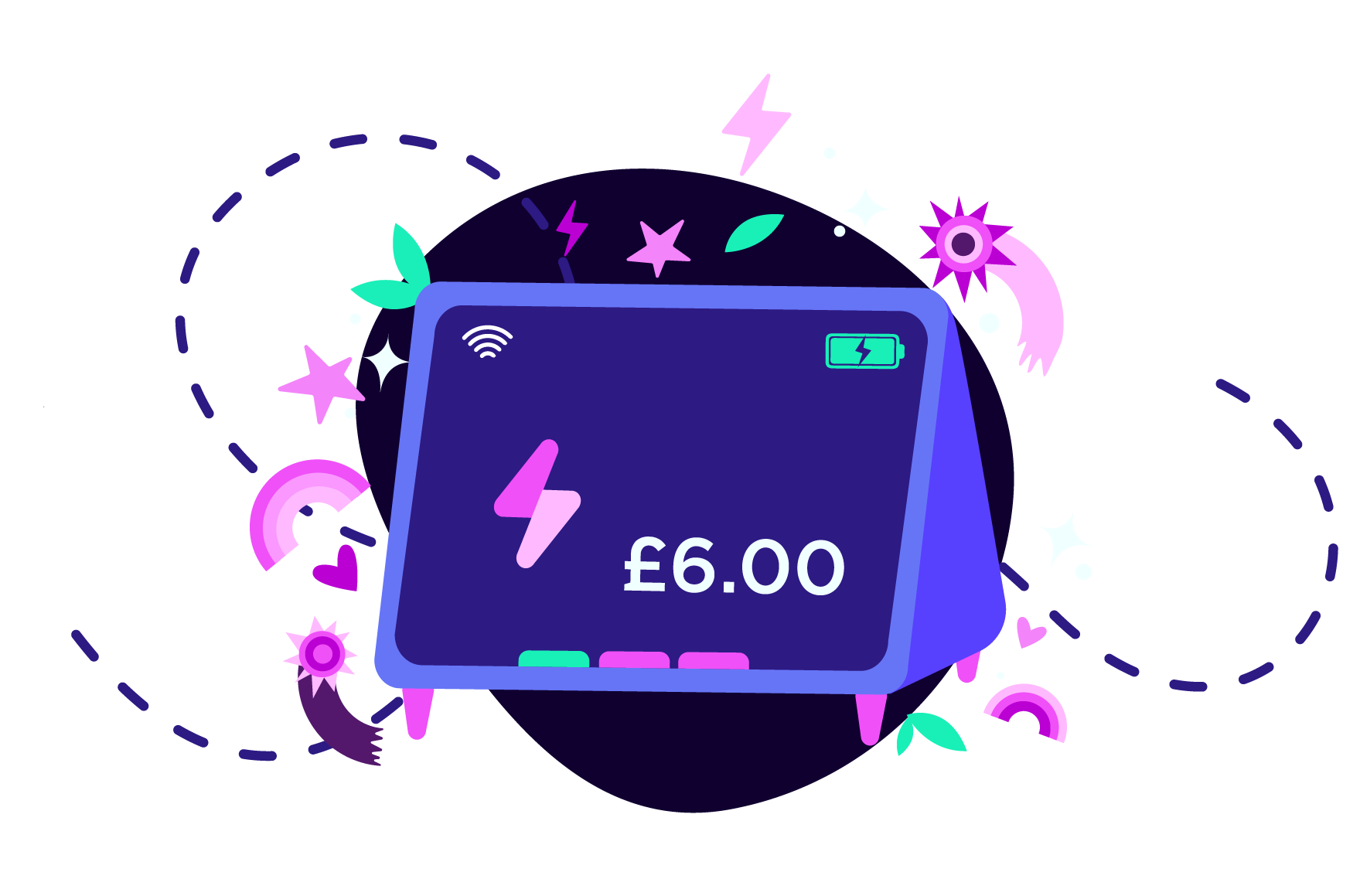
If you have the nifty, palm-sized Octopus Home Mini, it won't be able to receive smart data if the smart meter is currently non-communicative (or if you have no Wi-Fi!). Remember to keep your Home Mini within 5 metres of your smart meter!
What causes connectivity issues?
Connectivity is a common challenge with smart meters. One that we are always working to improve - for example, we were the first supplier to install 4G comms hubs in the North!
To understand connectivity, we must address how smart meters communicate. Smart meters work by utilising two wireless networks: the HAN (Home Area Network) and WAN (Wide Area Network).
Wider Area Network
WAN, also known as the smart meter network, is operated by the Data Communications Company (DCC) and overseen by the energy regulator Ofgem. This means it must comply with strict regulations to ensure smart meter data is kept private and secure.
WAN is the network your smart meter uses to share data with your supplier, i.e., us. This is how we send accurate bills and give you access to innovative schemes and smart tariffs.
If you live in an area with low WAN coverage, or your smart meters are located in a signal “dead spot” (e.g., a basement with thick stone walls), we may sometimes have issues communicating with them and receiving data.
Home Area Network
HAN is a secure, in-home smart meter network that allows the in-home display (or Home Mini!) and smart gas and electricity meters to communicate with each other.
The communications hub (comms hub), usually located on top of the electricity meter, is the 'power-house' of your smart home setup. It's how your smart meter shares data with your In-Home Display (IHD) or Octopus Home Mini, and with us, your supplier, via secure networks managed by the DCC.
Some properties where meters are far apart, or thick walls separate them, might require additional equipment to extend the HAN range and connect all smart metering devices.
To boost the signal, we’re installing technology known as ‘Alt-HAN’. If you are interested in getting Alt HAN installed, you can join our waitlist.
We also install Dual Band Communications Hubs for properties with particularly thick walls or for customers in blocks of flats to increase the signal inside your home (HAN). These require full investigations by our smart speciliast teams.
We understand that it’s frustrating to have to give readings in this case, but the problem likely isn’t with the meter itself, but a connectivity issue.
The key thing is that, although a meter might not have a strong signal, it will still function as a normal meter, so you’d need to provide meter readings.
If we do manage to get a signal from the meter, we can usually fix most issues remotely!
What else are we doing to increase smart meter functionality?
Home Mini bridge
Similar to our Alt-Han tech (or smart meter signal booster), we can harness the mighty power of our palm-sized Octopus Home Mini to boost the smart signal inside your home, i.e. your HAN.
Acting as a mini hub, the Home Mini can extend the signal between your gas and electricity meters by an extra 10 metres. This means properties with ‘dead zones’ or thick walls would benefit the most.
By ‘daisy-chaining’ home-minis (adding a few in a row), you can boost this even more. This is done on a case-by-case basis and requires investigation by our smart specialists.
Smart to Smart meter replacements
We’re entering a new phase of the smart meter roll-out, one focused not only on first-time smart meter installations (which are very important!) but on replacing existing smart meters with newer, more advanced models. These are essential to prepare the UK for future technologies, where we all benefit from a more flexible grid.
The primary reason for this move towards new smart installations is the phase-out of 2G and 3G networks and the introduction of 4G networks and beyond.
To keep your meter smart connectivity going, we need to ensure everyone has a 4G comms hub (the part of your meter that makes it “smart”).
To do this:
We’re upgrading older SMETS1 smart meters with shiny new SMETS2 models.
SMETS1 meters are not compatible with the new 4G comms hub, so we need to make sure everyone has access to a new-generation SMETS2 smart meter.
Comms hub replacements: We’ll upgrade your comms hub to a new 4G-compatible hub at no additional cost. The exchange is a breeze!
The move to Market-wide Half-hourly Settlement
We’re moving towards a smarter, more flexible energy system that makes it easier to balance usage across the country.
Currently, most customers’ bills are based on month-to-month billing, and we think that’s pretty old-school! Smart meters can record energy usage in real time (as often as every half hour!), which creates an opportunity to move all customers to half-hourly billing.
Think of it as upgrading the nation’s energy grid from an old dial-up connection to lightning-fast fibre optic. This nationwide rollout is being spearheaded by the energy regulator Ofgem and implemented by Elexon.
When your energy is measured in 30-minute chunks, it comes with some seriously great perks:
Better billing: you can rest easy, knowing you’re billed for exactly what you use.
Greater access to 'Time of Use' (TOU) tariffs: Accurate half-hourly smart data means access to even more innovative smart tariffs, letting you make the most of cheaper power when demand is low.
Decarbonisation: Knowing exactly when the UK is using power means the grid can run much more efficiently, driving down costs for everyone and making the most of green power.
As with any transition, things don’t always go smoothly. If you think anything looks ‘odd’ on your smart meter or in your billing, please contact us, and we can investigate it for you.
Don’t have your hands on a smart meter yet?
You can register your interest below for one, and we’ll let you know when we’re installing in your area.
FAQs
If you notice your smart meter is not communicating (i.e., you see estimated readings in your account), or if we ask you for a meter reading and it's been more than 14 days since your installation, you can get in touch with us, and we’ll take a look for you.
Before getting in touch, it's worth collecting the following info:
The distance between your electric and gas meter, including any obstacles between (if both present).
The construction of your property? (i.e., brick or stone).
Where are the meter (s) located? (ie, outside, cellar, under stairs, etc.).
What is your property location like? (i.e., surrounded by trees, hills).
A photo of your meter (s) showing all serial numbers and the surrounding area.
Has anything changed where the meter/s is located? (i.e., scaffolding, insulation, new walls).
Published on

Rebecca Gillespie
Product and Marketing Delivery Lead