

Supergroup Smart Home Tariff Workshop
My top 10 smart tariff / tech that I’ve either led the creation of, had a hand in or generally find really useful:
7) Our open API and changes coming
6) Microgrids and how these work with Zero Bills
5) Early adopters but impact of rule bending on IO-Go
3) Our Works With Octopus partners
2) Electric Match helping businesses make a difference too
1) Our open Labs environment where we frequently launch new trials and prototypes

Session Recap
Ofgem Price Cap: What Changed?

Greg opened the session and Rachel went on to briefly cover the Ofgem price cap announced on Friday 21st Nov 2025. Ofgem’s announcement was widely expected to be a 5% to 7% drop when in fact they revealed a 0.2% increase. Worse when you break out gas and electricity they’ve increased electricity costs and dropped the gas cost. And it gets perverse when you see that wholesale costs have fallen but policy costs have increased (as well as allowance for supplier costs) which means higher standing charges.
We have a very bizarre situation where wholesale costs have dropped, electricity retail cost has risen and gas prices have fallen - the complete opposite of what we expect from the growth in renewables and desire to get off gas.
The Budget Update
But by Thursday 27th Nov 2025 we had more change as part of The Budget which reduces bills by around £150 by moving three quarters of the renewable obligation to general taxation and axing the energy company obligation payments - due to go into effect on the 1st April. So we will still see the Ofgem raise for January to March on capped tariffs.
On electricity what we’re seeing here is a flattening of the variability of wholesale energy costs and an increase in the non-wholesale elements. If you picture Agile import/export that means reduced variation so in general implies a move away from the ability for time of use tariffs (i.e. smart tariffs) to reflect high/low renewable generation.
This is confusing when we consider:
- We know we’re moving to electrification of everything
- We know we’re not going down the Hydrogen for heating path
- We know that renewable energy is lower cost than fossil fuel and is growing rapidly
- We know that renewable generation is distributed and intermittent
The “spark gap” problem
Nigel Banks commented during his masterclass that this means the ‘spark gap’ between electricity and gas means heating parity is only achievable at an air source heat pump efficiency of 4.7.
So again this will negatively impact the government’s target for heat electrification and slow down the gas transition. The budget announcements pulls this back a little but still not enough.
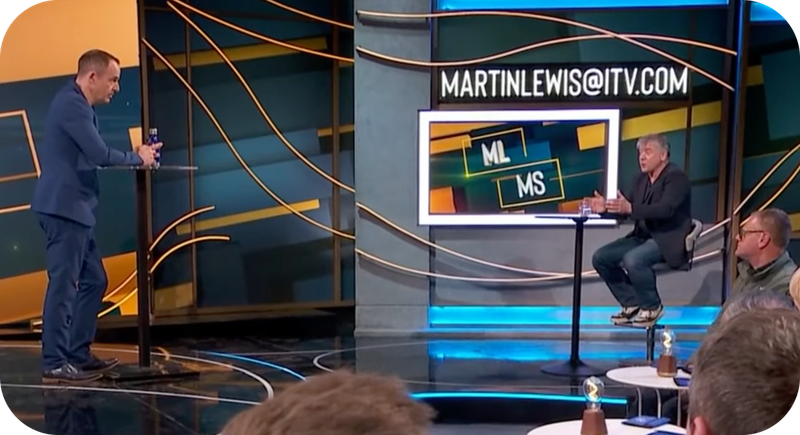
In fact as Greg said to Martin Lewis on Tuesday’s (25th Nov 2025) TV show at this rate if wholesale rates dropped to zero electricity prices would still continue to increase over the next decade.
Flexibility is being squeezed
Renewable energy is distributed and intermittent so the wholesale market will still be volatile which is why all our smart tariffs exist for us consumers to benefit via our bills. But instead what’s happening here is companies buried in the system are taking margins from flexibility and policy costs are pushing up the fixed element of electricity costs. It's as though Ofgem are uncertain that homes and businesses can make a difference in keeping grid investment down but the passion and involvement of all smart tariff customers and the level of time-of-use shift and responsiveness to flexibility markets as a result shows it can be done and we encourage Ofgem to work with us and customers to make a difference. If we continue this path it’ll mean there’s no incentive to avoid charging an electric car between 4.00pm and 7.00pm (peak demand) and so even more grid will need to be built which will get lumped onto policy costs even more and so on.
The Wasted Wind site is a good example of this. Storm Claudia on 14th Nov 2025 meant we had really high wind generation some of which was curtailed at a cost of £820,553. But at the same time gas generation elsewhere in the country was required to meet demand at an additional cost of £2,928,887. That’s a total of £3,749,440 extra cost just on the 14th Nov. And since the start of 2025 to the date of my Masterclass we’ve spent £1,286,372,794 on this combination of curtailed wind and extra generation from burning gas. Also check out Robin Hawkes' site.

I mentioned that electricity generation from coal dropped from 30% to 0% in the decade to October 2024. Change is possible and can happen rapidly.
In 8 years (Go and Agile were launched in 2018) we’ve shown that millions of customers now make change possible by shifting the time of use of electricity according to price.
Surprise surprise, we all react to the price of something.
And yet that risks being ignored.
2025 has been a global turning point:
- Electricity from coal dropped 0.6% and from gas dropped 0.2%
- Solar increased 31% in first half 2025
- Wind increased 7.7% in first half 2025
- CO2 emissions have peaked now that renewable growth exceeds demand growth
- Renewables globally now exceed ⅓ and coal has dropped below ⅓
- In the UK 36% of electricity is from wind & solar and 66% is classified as low-carbon
So we can conclude that investment in renewable energy is working and making a huge difference.

Top 10 Run Down
10: Smart Tariffs
Agile is still our more general tariff whilst Go, Cosy, Flux varieties are designed to provide the best benefit for electric cars, heat pumps and home solar-batteries. Fan Club, like Agile, provides cheap energy when the wind blows locally and Snug is aimed at anyone with night storage heaters. I also covered our Tenant Power tariff which is a game changer for social housing landlords to help their tenants benefit from solar by offering a discount to the current flexible tariff anywhere between 20% and 30%. This discount is agreed per social housing landlord and applies to all their tenants that are able to join the scheme. Find out more here
9: Agile and Tracker Dashboards
Inspired by Mick Wall’s highly popular site, these are tools to see current & past rates, and also a cost comparison by taking your historic half-hour data to see what your bill could have been. A word of warning: any time-of-use tariff comparison (whether ours or any other energy supplier) based on historic half-hour data will most likely be quite out of sync with the cheap periods so can’t give too much of an indication of what your cost would be in the future. E.g., if you’ve simply not been charging a car overnight then plugging those historic readings into the Go tariff won’t give a true reflection of what Go might cost you if you did charge overnight. In fact that’s the whole point - time-of-use tariffs help us shift load that we can shift (car charging, yes; cooking, gaming, TV maybe not, etc).
8: The Forum
We invited all current forum members to the Masterclass. Our forum is quite technical and set up as a place to discuss and share tech rather than seek or escalate help - hence we’ve kept it as invite-only for many years now.
7: Open API and changes coming
Our open API lets anyone create and make available any service or product integration to us - that could be simply discovering the tariff you’re on and making something track rates or using your historic half hour data to offer use insights.
I mentioned that we’ll be making an OAuth method available which will give a few security advantages over the current API Key method:
- You’ll get a pop-up to log in and agree access instead of having to find your API Key and pasting that into a service so it’ll be much easier to connect.
- You can grant access per service/product and revoke one at a time which will be much easier than storing and regenerating API Keys.
- We’ll apply better control over what each service can access which improves privacy control of your data.
- We can better promote things that are connected to us.
6: Microgrids and Zero Bills
I didn’t dwell too long on Zero Bills as Hannah covered that in her Masterclass, but Microgrids are going to get interesting. A microgrid allows us to manage energy generation, storage and consumption across a few hundred properties (I showed the example of this one). A site like this has one large battery (more efficient), solar on all the properties and a reduced scale connection to the national grid. This means it’s either easier to certify for zero bills, or we’re able to offer lower rates. Watch this space for more on microgrids and also other community models coming too.
5: IO-Go rule bending
We really like seeing all the engagement with all our smart tariffs and the benefits they’re going us this really shows the impact we can all make.
But I showed the worst case example we’ve come across of someone managing to get a full day (10.04am to 10.00am the next day) of low rate on IO-Go. It’s a small number of customers figuring out ways around the control in this way and obviously this isn’t in the spirit of the tariff. In fact it might mean a car is charging at the worst time of day (4.00pm to 7.00pm) and driving up the cost for everyone else. So watch out for changes here as we tighten this up a bit.
4: Data data data
I outlined that we’ve got a heat pump, electric car, solar battery system and various other devices such as Netatmo indoor/outdoor temp/humidity, Tewke switches/sensors, Voltaware disaggregation, Tado zonal (controversially - but my role is R&D so this is experimental), the Home Mini and also Home Assistant. There’s way more than 100 data points across all those and all a little disconnected other than Home Assistant - and for that you need a degree to figure out as it’s incredibly flexible. With the right insight and control all this will help make a home more comfortable (humidity, temperature), efficient and lowest cost. There’s a lot more to do on data here.
3: Works With Octopus
Is our Works With Octopus a well kept secret?
A few years ago I started getting frequent requests from customers to confirm if we liked x product or service that purported to connect to our API. These tend to be for the Agile import/export tariffs as connecting tech, services or data visualisation is particularly relevant on these tariffs. So we created the Works With Octopus program to showcase the best of the best third party connections.
I’m keen to see integration give real benefits plus it’s great to give innovative start-ups a leg up where they’ve got something unique that has potential to make a difference. For example Agnes’s Airex digital bricks, Dhruv’s Livegrid digital fishtank or Heata’s water tank data centre.
As the Agile import and export rates are so dynamic then it’s obvious you want to automate things accordingly. We’ve even built our own Octopus Labs service to do this with a small number of products. And we built a tool to view current and historic rates. Our Intelligent Octopus tariffs make this far simpler by having a two or three rate tariff that doesn’t change daily but we use the dynamic nature of the wholesale market to figure the best time to charge a car. It’s important for us that we send signals to known Intelligent Octopus devices as we’re sometimes bidding these into the flexibility markets - so we have to know the kW and kWh we can expect to get. That’s one reason that the IO control signals (such as IO-Go extra half hours) aren’t published via the API.
It’s your choice if you want max exposure to the wholesale market or rely on us to make it all work. I can see pros and cons of both and in fact I think we tend to see the more technically minded go for Agile. I think that’s why it’s important we have quite a range of tariffs as we all think differently.
There’s naturally more things connected to the Agile API than we’ve connected Intelligent Octopus to simply because the API is public for anyone to use. In fact it’s so open we don’t actually have a truly authoritative list of everything attached to it. That’s one reason we created the Works With Octopus program - a way for us to vet and promote the ones we really like and value. But we can’t list everything.
Things connected vary from many of the solar-battery manufacturers and electric car chargers to services such as Home Assistant, Homely and Energy Genie. Mick Wall’s Energy Stats UK is still probably the most well known integration. I’m always on the lookout for tech and services making clever use of the API so all feedback welcome.
2: Electric Match
It’s not only our homes that can benefit from the combination of tariffs and renewable generation. Electric Match is for businesses wanting to go further with consuming energy at the best times for the benefit of the grid. Businesses are able to book output from named generation sites and see a live dashboard of their consumption and generation data.
This is a far deeper relationship with the grid than any other service I’ve come across and the kinds of businesses such as Cafe Nero are leading the way here.
1: The Octopus Labs
I’m showing my bias putting this in at number 1 but for a reason. Labs is where we run experiments or launch new things we want to trial and kick off scale with. We launched Powerloop, Fan Club, Electric Match, Solar Share and Tenant Power here. It also formed the prototype for Intelligent Octopus. The Agile and Tracker dashboards are part of this too. And the IFTTT and Alexa services live here too. Several of our Works With products are connected through Labs too which helps us take things over to Intelligent Octopus in time.
Although a bit of a secret it’s an open innovation approach that any Octopus customer can access and use. It is a lab though so we do break things from time to time and support is very limited.
Live Q&A
The remainder of the masterclass was answering live questions. We had a few sent in before and I covered as many live questions but I’d have needed far more time to cover every question so instead I promised to answer all questions afterwards.
Head over to the forum where I’ve posted the full set of responses.
Published on 17th December 2025 by:

Hey I'm Constantine, welcome to Octopus Energy!
×Close window