Energy price cap predictions
Looking for info on the October 2026 price cap? Our full price cap guide explores the reasons behind rising prices.
Ofgem's Energy Price Cap changes every few months and it can be tricky to figure out how it’ll affect your bills. To help, we’ve created a yearly forecast designed to put your mind at ease and take the guesswork out of managing your energy.
Good to know: We're the only large supplier to have never charged the full price cap, and we're offering one of the cheapest fixed tariffs from any large supplier!
Already a customer? Change your tariff online.
Not a customer yet? Get your quote today.
Price cap predictions
This is our prediction based on industry data and Ofgem's price cap calculation for a typical household. Here's where things get a little complex: in July 2026, Ofgem changed its estimation of how much energy a "typical household" will use, known as the TDCV.
Old TDCV: 11,500 kWh of gas and 2,700 kWh of electricity a year.
New TDVC: 9,500 kWh of gas and 2,500 kWh of electricity a year.
So, if you look at our July price cap blog, you'll see we say the price cap is £1,862. We decided to use the old TDCV for that calculation so we could compare apples to apples with previous months without the baseline shifting.
Why are we now saying it's £1,663? Because we are now using the new TDCV. Now that we've had two price cap announcements using this new baseline, comparisons have become easier again.
Confused? We explain more about the price cap and the TDCV change here.
Last updated: August 2026.
| Time Period | Avg. annual bill (Price Cap) | Change | Confidence |
|---|---|---|---|
| Now – Sep 26 | £1,663 | Confirmed | |
| Oct – Dec 26 | £1,723 | +£60 | Confirmed |
| Jan – Mar 27 | £1,959 | +£236 | Low |
| Apr – Jun 27 | £1,916 | -£43 | Very low |
| Jul - Sep 27 | £1,708 | -£208 | Very low |
How to switch tariffs:
Click 'Change my tariff': one of the options under your account balance. You'll have the option if you're on a variable tariff or a fixed tariff that's about to end.
If you see a deal you like, you'll be able to switch.
Flexible vs Fixed tariffs
The price cap follows the cost of energy, which changes based on things like supply and demand, the weather, and global events – that’s why it goes up and down. If you’re on a flexible tariff (also known as a variable tariff), your prices are linked to the price cap and move with the market to reflect the actual cost of energy. Our Flexible tariff has always been below the price cap, so you’ll know you’re getting great value.
However, some people prefer fixed rates for peace of mind. If you're on a fixed tariff, your energy price stays the same for a set time – and right now, these offer our cheapest rates. That doesn’t mean your bill will be the same each month – if you use more energy, you’ll pay more – but you won’t be hit with sudden price changes, giving you extra security.
What is Ofgem's energy price cap?
The energy price cap is a limit on the price of energy that suppliers can charge per kilowatt hour. It’s decided by Ofgem and affects customers on variable tariffs (where energy prices change based on the wholesale cost of energy).
Keep in mind that Ofgem’s price cap sets the max amount suppliers can charge for each unit of gas and electricity — not your final bill. The more you use, the more you’ll pay.
Good to know: Octopus is the only large supplier to have never charged the full price cap!
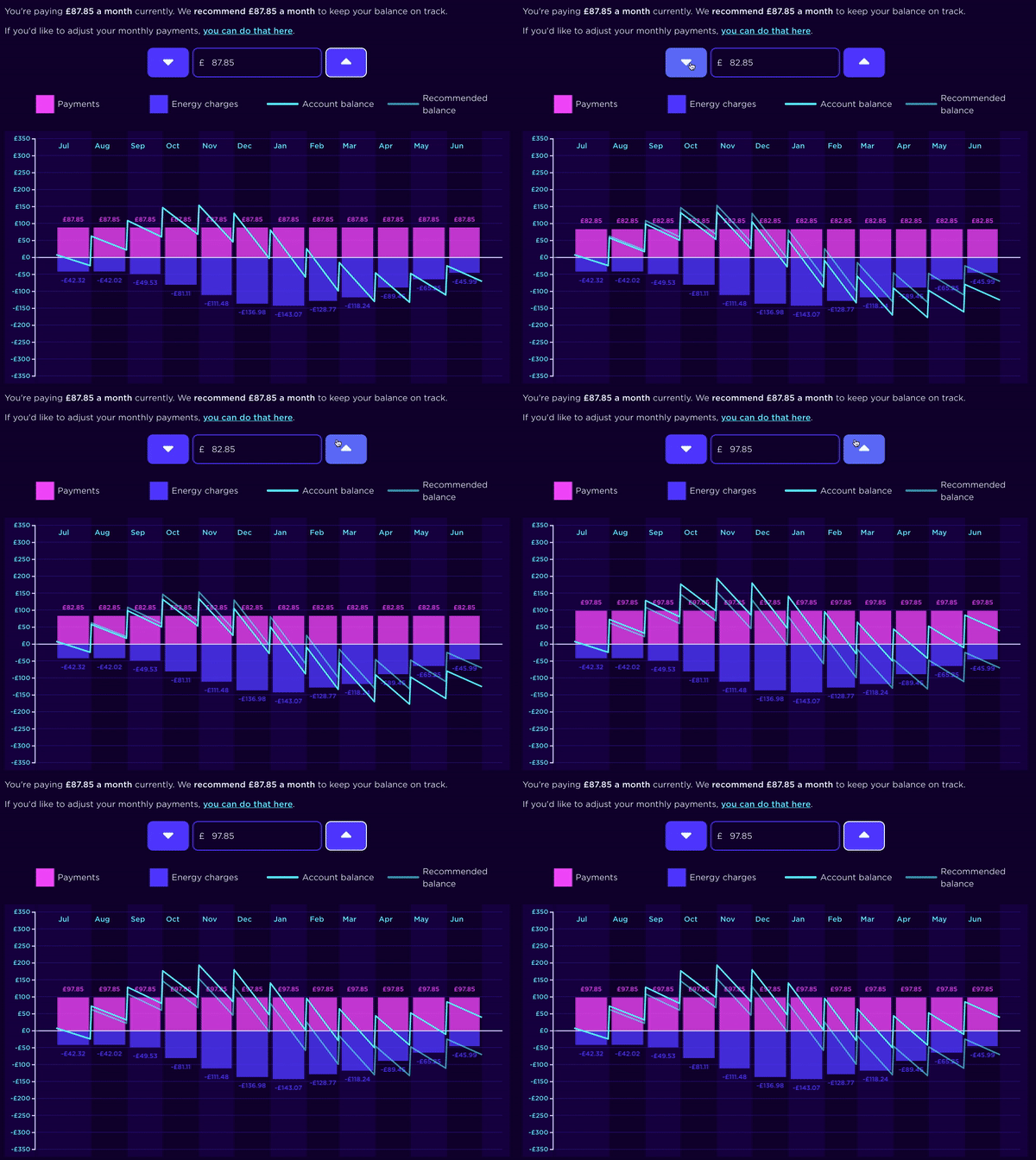
Check out our balance forecast tool
Map out your energy balance over the next year to see what will happen if you increase or decrease your Direct Debit. Test out different payment amounts, decide what you're comfortable with, and see what your balance might look like in a year's time.
Save by switching to a smart tariff
Smart tariffs are a game-changer if you’ve got smart home tech like solar panels, a heat pump, or an EV – or if you’re ready to play a more active role in managing your energy use.
With tariffs like Agile and Tracker, customers get access to daily or half-hourly energy prices, so when wholesale electricity prices drop, so do your bills. As these tariffs are impacted by market volatility, they're best suited to people who can shift their energy use to avoid pricey peaks, often by using smart home tech like solar and batteries.

Get support if you're struggling
Octo Assist is a £40 million customer help fund and a collection of support schemes designed to help customers who need it most keep on top of their energy, and keep warm without worrying. The kind of support we offer ranges from free electric blankets and Winter Fuel payments, to standing charge waivers for those who are eligible. We even loan out thermal cameras to help more customers save heat in their homes — just one of the many ways we're helping people become more energy efficient.