

Five reasons British energy bills are so high
Welcome to Rewire, a new publication to explain why prices are so high and the solutions that could bring them down. In this piece from our first edition, we look at five key reasons your bills are so high even though renewables are getting cheaper.
1. Renewables are cheap, but gas sets the price for everything
According to Ofgem, about a third of our electricity bill comes from the wholesale price. That price is set every 30 minutes using an auction system. Lots of power generators offer their electricity and the system takes the cheapest offers first, then adds the more expensive ones until there’s enough electricity for everyone.
But the last and most expensive power station that gets picked, usually a power plant that burns natural gas, sets the price for everyone.
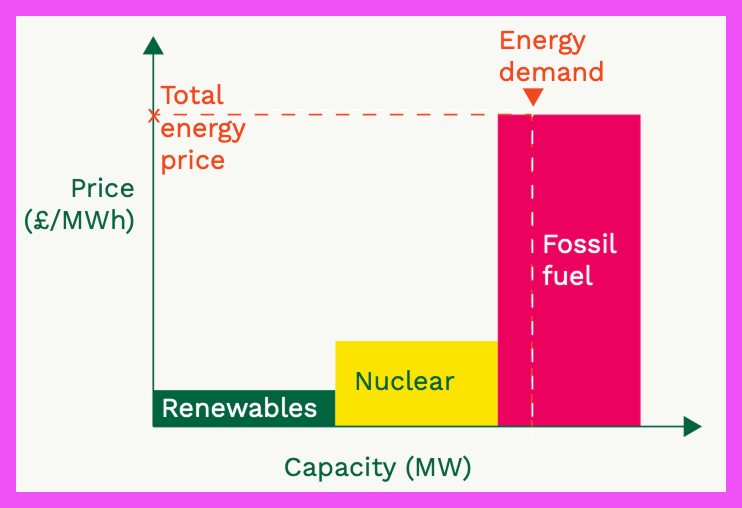
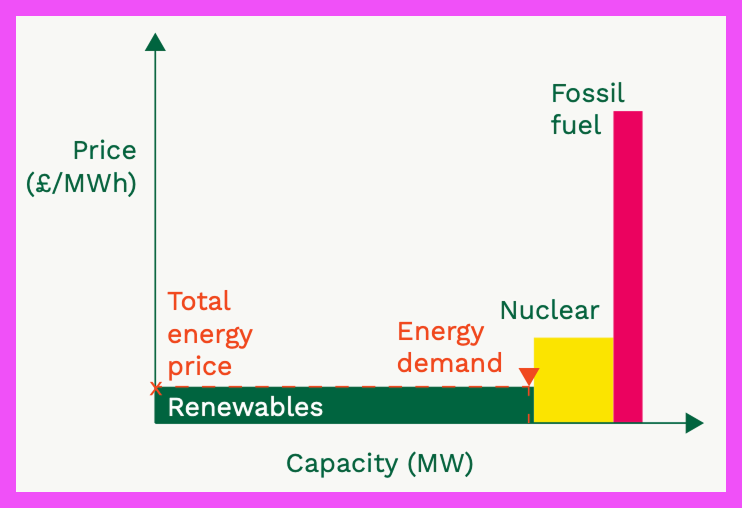
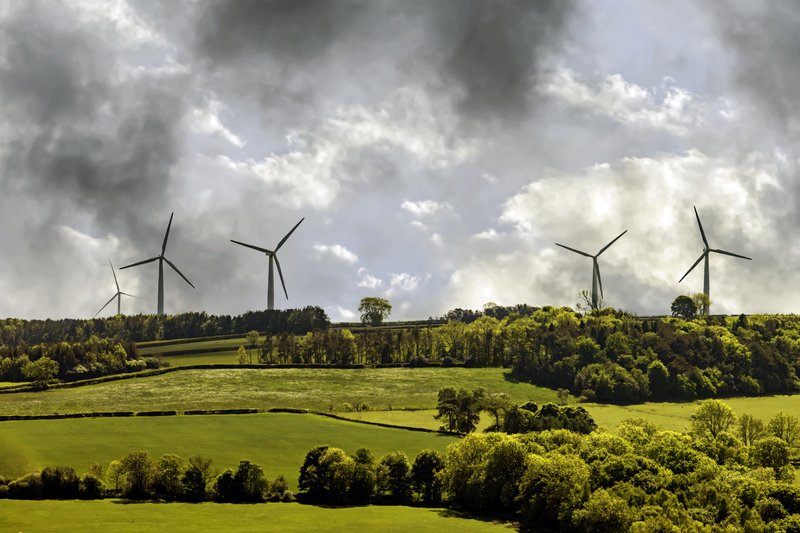
Where we are...and where we want to be. Images: Stonehaven/Greenpeace
And because gas prices have shot up, wholesale electricity prices have jumped too. This is the main reason your energy bills are higher. Overhauling the market to stop gas-powered power stations setting the wholesale price could shave £5bn a year off energy bills by 2028.

2. The grid isn’t fit for purpose — and fixing it will cost billions
Nearly a quarter of our energy bill relates to “network costs” — building or maintaining the cables and pipes that bring electricity or gas into your home.
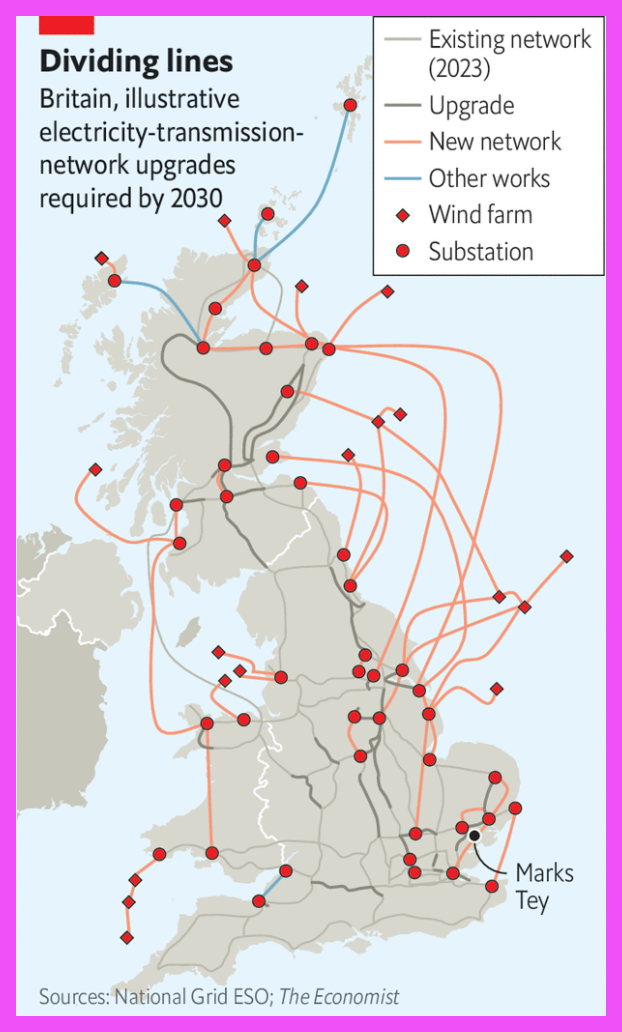
For two decades after privatisation in 1990, these costs fell because very little money needed to be invested in upgrades. That has changed. The government is investing to expand the grid because clean energy is more decentralised — solar and wind farms are more spread out.
Most wind farms are near Scotland, but we don't have the cables to move their electricity to the south, where more of it is needed. Under the current electricity market rules, these wind farms are paid to turn off (or “curtailed”) if the grid can’t carry what they could generate — and then gas generators closer to demand are paid to generate the replacement electricity.
All the cost of this “curtailment” and “balancing” goes on everyone’s bills and really adds up. Wasted wind cost £1.5bn last year and could hit £10bn annually by 2030.
3. Ministers are hunting white elephants
The government is pouring a lot of money into projects that make little sense - paid for by our bills. One big tranche of money, £10 billion over this parliament, is going towards developing carbon capture technology — an experimental technology that is simply a gift for oil and gas companies. It’s like paying a (very bad, very expensive) cleaner to scoop dog mess from the carpet (leaving most of it behind), rather than training the dog to simply not mess the carpet.
The government has also allocated another £2.5 billion towards developing “hydrogen infrastructure” — another experimental technology that most experts dismiss as too expensive for homes and potentially dangerous. The funding for this investment will come from a levy on energy bills. But our energy bills shouldn’t be used to fund expensive subsidies and experiments for the fossil fuel industry and incumbents.
4. Using energy at quiet times should pay — but not everyone is on board
Our electricity system was built to match supply with demand, so we needed the capacity to tackle the heaviest periods of demand. That way it could be turned on when needed.
Today, Octopus gives discounts for people who use electricity when it’s cheap and pays them to use less when it’s expensive, thus balancing demand and supply. This isn’t a sacrifice — it’s a bargain, just like special offers in supermarkets, enabled by modern technology and smart meters.
Some people try to position this as “rationing” but it’s the opposite: it’s a way of bringing people bargains by using electricity differently if they want to. It’s just like traditional Economy 7 but much more powerful.
In energy, we’ve traditionally been able to save money only by using less, whereas with food, for example, we can save money by buying differently — like switching supermarket brands or snapping up seasonal offers. Electricity should be no different. Those who choose the bargains make it cheaper for themselves — and for everyone else by reducing system costs. And it’s not a hassle: Octopus can optimise heat pumps, batteries and EVs to use less or more electricity at the most cost-effective times.

In energy, we’ve traditionally been able to save money only by using less, whereas with food, for example, we can save money by buying differently — like switching supermarket brands or snapping up seasonal offers. Electricity should be no different. Those who choose the bargains make it cheaper for themselves — and for everyone else by reducing system costs. And it’s not a hassle: Octopus can optimise heat pumps, batteries and EVs to use less or more electricity at the most cost-effective times.
A more flexible system stops the need for expensive sources of electricity, reduces the need for very expensive system upgrades, and reduces everyone’s costs. But many of those running our grids and networks still haven’t got their heads around this technology, and everyone’s bills are higher as a result. Because it’s uncharted territory, it’s hard to predict exactly how much money grid flexibility would lop off energy bills, but experts put the figure between £5bn and £10bn a year.
Smart idea
Ready to save money and help the world ditch fossil fuels faster? Check out our smart tariffs.
5. British generation projects are stuck in a gridlock
The grid is in crisis, but this is made worse by severe deadlock and paralysis. Lots of developers are sitting and waiting to build projects and connect them to the grid.
At one point, the queue of projects added up to over 700 gigawatts — about ten times the UK’s total installed capacity. In 2023, Octopus produced a report into how the government could fix the gridlock. Many of our recommendations have recently been adopted but there is far more to do. Slow progress in building new electricity projects, while system operators are running old and creaky software, makes grid congestion worse and raises all our bills.
There are areas where we can’t build new houses, factories, warehouses and data centers because of a lack of grid and connections.
We believe the system operators and Ofgem need to do far more to speed up connections to the grid, be transparent on where there is capacity to connect, enable other companies (like us!) to do it ourselves, and digitise operations to better manage the system. That would help to reduce costs for everyone.
Our thoughts
We have barely scratched the surface. The system needs reform, and Octopus plans to highlight the need for it in Rewire. It's critical that we build the lowest-cost energy system possible. Cheap renewables get us a long way there but are not the whole answer. We need to build more generation closer to where it is used to avoid really expensive transmission build out, avoiding thousands of km of unnecessary wires and pylons. And we should be using every electron we can: in this energy landscape, it’s insane to waste a single one.
If you're struggling, we're here
Energy prices are too high right now, and that's not your fault. We’re doing everything we can to fix that – but for now, we know many people need extra help.
If you're worried about keeping on top of your bills, our £40 million Octo Assist fund is here to help. We offer bespoke support including free electric blankets (we've given out 60,000 so far to help elderly and medically vulnerable customers keep warm for less), standing charge waivers and much more.
You can also fix your prices below the price cap to protect yourself from increases in the year ahead. Octopus remains the only large supplier that's always kept standard prices below the energy price cap.
Our team is always here to help – if you want to talk, just get in touch.
Published on 2nd April 2026 by:

Hey I'm Constantine, welcome to Octopus Energy!
×Close window