Energy prices from April 2026, and what they mean for you

Energy bills are coming down: Thanks to the Government removing certain levies and obligations, energy bills will fall from April 1. These cuts will save a typical home around £120 a year.

Standing charges: While other large suppliers increased their electricity standing charges, Octopus is not. We will hold or reduce electricity standing charges in every single region.

Price protection: Despite global volatility, Ofgem's Price Cap will protect your rates from further rises until at least July.

Octopus remains the only large supplier to have never charged the full Ofgem price cap.

Summary of changes

You can see the previous price change blog for January 2026 here.

From April 1, energy bills are falling

This is largely thanks to the Government’s decision to remove some levies and obligations from energy bills — a move Octopus has championed for years. Moving these costs off your bills and into general taxation is a fairer way to recover them, and it’s finally making a difference to your monthly costs — take a look at the PDF attached for a personalised breakdown.

Standing charges: No rises from Octopus

The April price cap actually increases standing charges for electricity in most areas of Britain to cover some of the cost of grid upgrades. The other large suppliers have been quick to pass these rises on. We don’t think it’s right. Standing charges are already too high, so Octopus is holding or reducing electricity standing charges in every region.

We remain the only large supplier to have never charged the full Ofgem price cap, and we’re committed to keeping standing charges as low as possible.

Good to know: if you're not paying by Direct Debit, you could save ££s by setting one up with us. It's super quick and easy to get set up in your online account.

What about fixed tariffs?

Fixed tariff prices will also fall from April 1. This is thanks to the Government’s decision to remove some levies and obligations from energy bills — a move Octopus has championed for years. Moving these costs off your bills and into general taxation is a fairer way to recover them, and it’s finally making a difference to your monthly costs.

Obviously, there are lots of uncertainties around the ongoing war in Iran. We'll of course continue to keep all our customers updated, but you can also view the latest information on our blog.

If you ever find yourself struggling to pay we have lots of support on offer.


Frequently Asked Questions

General

I'm on a fixed tariff, what does this mean for me?

×

Fixed tariff prices will also fall from April 1. This is thanks to the Government’s decision to remove some levies and obligations from energy bills — a move Octopus has championed for years. Moving these costs off your bills and into general taxation is a fairer way to recover them, and it’s finally making a difference to your monthly costs.

Obviously, there are lots of uncertainties around the ongoing war in Iran. We'll of course continue to keep all our customers updated, but you can also view the latest information on our blog.

Does the energy price cap affect me?

×

If you’re on a variable tariff, like our Flexible Octopus, the Ofgem Price Cap protects the price you pay.

The price cap specifically applies to variable tariffs because they aren’t fixed against the volatility in the energy markets. Different suppliers can refer to these tariffs in a number of ways; standard variable tariff (SVT), non-fixed, etc. At Octopus our variable energy tariff is called Flexible Octopus.

If you’d like to confirm which tariff you're on, and details like your current prices and contract dates, you can see them on your online account (scroll a little way down and look at the details below your property address).

You can read more about the energy price cap and whether it affects you on Ofgem’s website.

Is the quoted figure from Ofgem the maximum price I will pay for my energy?

×

No: this figure is not the absolute maximum a customer could pay.

If you’re affected by the price cap, the protection you receive is relative to how much energy you use.

Ofgem calculates the price cap based on the yearly usage of a typical medium consumption home (that's 2,700 kWh of electricity and 11,500 kWh gas per year). It represents the maximum amount Ofgem considers fair for energy suppliers to charge customers on variable tariffs.

This figure is used by suppliers to apply the price caps protection against each customer's actual usage. Put simply: if you use more - or less - energy than that typical home, your own yearly energy costs on a tariff priced at the maximum rates may be higher - or lower - than the annual figure from Ofgem.

Payments

How could I get energy cheaper by paying by Direct Debit?

×

Our Flexible tariff will have slightly different unit rates and standing charges based on your payment method. It's not a flat discount for Direct Debit customers (or a charge on non-Direct Debit customers) – it’s the typical savings an average home could see over a year on the cheaper Direct Debit dual-fuel rates.

If you change how you pay, our system will pick that up and adjust your rates automatically, so if you don’t have a Direct Debit right now, it’s super easy to access the cheapest prices. All you need to do is set up a Direct Debit online and we’ll do the rest.

Why are tariffs sometimes cheaper if I pay by Direct Debit?

×

Not having a Direct Debit creates us significantly more admin.

We don't think it's fair to make everyone cover that extra cost, so we do offer a cheaper rate for those who choose to pay by Direct Debit, which costs us less to manage.

What energy prices will I be paying?

×

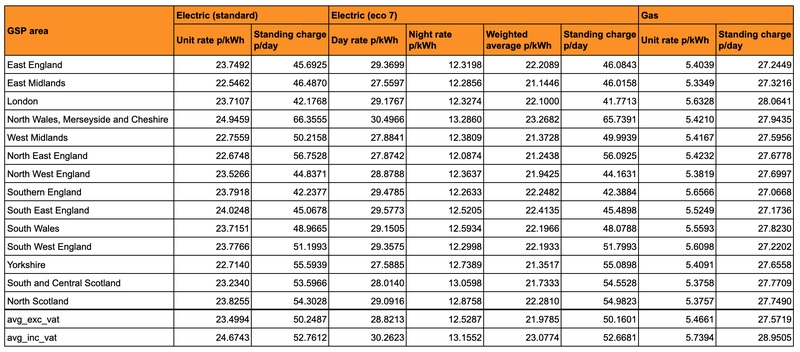
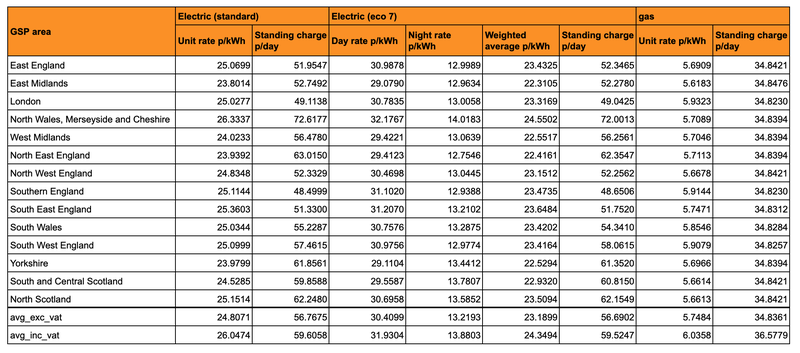
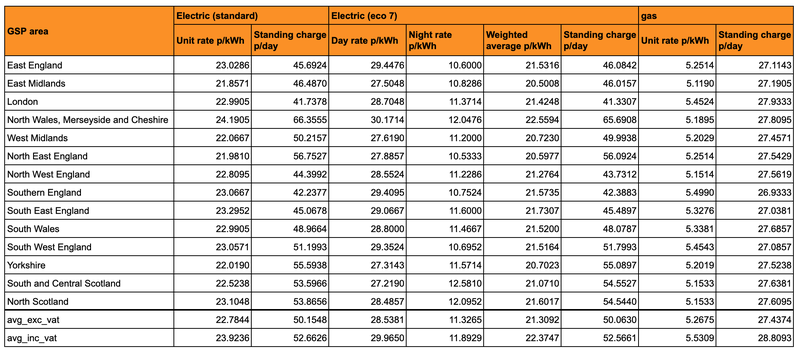
Your energy prices depend on where you live and how you choose to pay. Below is a breakdown of all Flexible Octopus rates and charges by region and payment method.

Flexible Octopus prices for customers who pay by Direct Debit

Flexible Octopus prices for customers who pay by Direct Debit apr

Flexible Octopus prices for customers who pay by other methods (i.e standard credit)

Flexible Octopus prices for customers who pay by other methods (i.e standard credit) apr

Flexible Octopus prices for Smart and Non-Smart (Trad) Prepayment customers

Flexible Octopus prices for Smart and Non-Smart (Trad) Prepayment customers apr

Why do prices vary based on location and payment method?

×

It costs us more to supply energy to some areas depending on things like proximity to generators, cost of maintaining local networks and more.

The same is true with different payment methods – for example, it costs suppliers more to administer and manage accounts that don't pay by Direct Debit, so Ofgem factors that into their Price Cap.

What are the actual maximum unit rates and standing charges of the energy price cap?

×

The price cap sets a maximum rate for:

  • Energy units: the price suppliers can charge variable tariff customers per unit of gas and electricity you use
  • Daily standing charges: the price suppliers can charge per day for ongoing costs, like paying the companies who manage distribution networks, operating costs, etc.

Ofgem have shared that on average - for customers paying by direct debit - the unit rates (inc. VAT) will be:

Electric:

  • 24.67 pence per kWh
  • 57.21 pence daily standing charge

Gas:

  • 5.74 pence per kWh
  • 29.09 pence daily standing charge 

Important: these are averaged figures from across all regions in the UK. As certain costs vary, e.g. what transmission network fees we pay in an area, the actual maximum unit rate varies depending on region. There are other factors too: different maximum rates for Economy 7 tariffs (which have a day and a night price) and prepayment meters.

You can see Ofgem's figures on the price cap standing charges and unit rates here.

Fixed Tariffs

I'm on a flexible tariff right now, should I move to a fixed tariff?

×

We can't really say whether it would be the best choice for you; it's best to compare rates for your area online and see if it would save you money.

I’m on a fixed tariff right now, what happens when it ends?

×

If you’re on a fixed tariff, the first thing to know is that the price cap doesn’t affect your current energy contract.

We’ll always email you in advance of your fixed tariff coming to an end.

If you’d like to confirm your current prices and contract dates, you can see them on your online account (scroll a little way down and look at the details below your property address) or on any PDF energy statement. It’s usually on the second page, near the top of the breakdown for your electricity and / or gas charges for the period.

Published on 18th December 2025 by:

image of Joe Richardson

Joe Richardson

Operations Director

Hey I'm Constantine, welcome to Octopus Energy!

×