

Britain was once a global EV superpower. How times have changed

Britain's milk floats made us early EV leaders, but we stalled. China ended up on manufacturing, but the race isn't over. Vehicle-to-grid technology is our chance to lead the next energy revolution.
A brief history of EVs
Electric vehicles (EVs) are often seen as a technology of the future. They’re actually very old.
In 1899, 38% of all vehicle sales in the US were for electric cars, with just 22% for petrol vehicles and 40% for steam-powered vehicles. EV brands emphasised that their cars were cleaner, quieter and more reliable. The petrol vehicle was tricky to operate: you had to work a difficult hand crank just to start the car.
It was a similar story in Britain. In 1896, Walter C Bersey set up the London Electrical Cab Company. The vehicles were powered by a rack of batteries on a tray underneath the vehicle. The batteries could be detached and replaced within minutes, and then charged at the company's central depot. Customers would pay a subscription which allowed them to travel a certain number of miles a year. Essentially, the London Electric Cab Company was the Uber of its day.
The gentle whir of the milk float and the clinking of glass bottles became a cherished part of Britain's soundscape
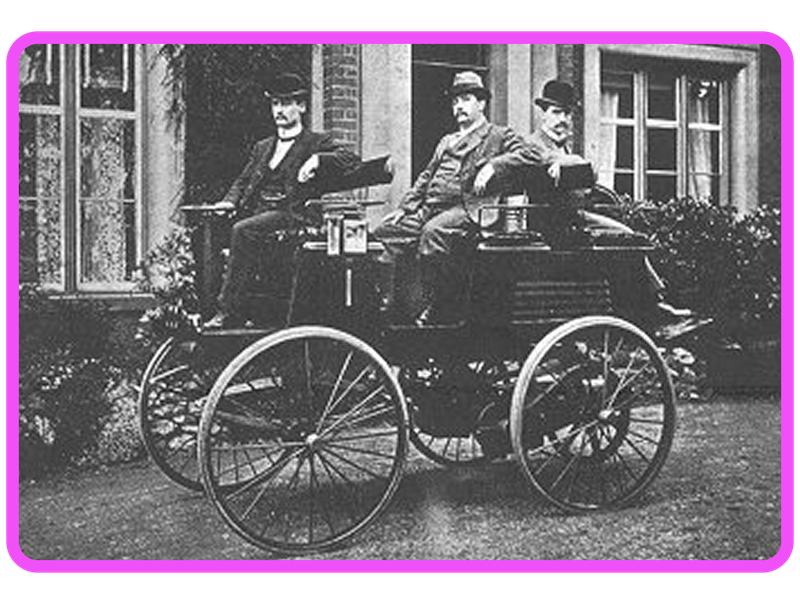
An electric car built in England in 1895 by Thomas Parker
How EVs decelerated
The petrol, or ICE (internal combustion engine) vehicles, ended up winning the race. Between 1899 and 1909, American sales of ICE vehicles increased more than 120 times.
Ironically one of the most decisive factors was an electrical innovation: the electric starter motor, introduced in 1912. This made that hand crank obsolete. Suddenly ICE cars were more palatable to the mass market.
The EV became something of a dead end in the history of technology. A route not taken.
Why Britain was special
Here, a uniquely British EV was humming along suburban streets every morning. The humble milk float.
The daily milk round was a low-speed, short-range, stop-start journey. The electric float was the perfect tool. It was silent, cheap to run on overnight electricity, and mechanically simple. This single, practical application made Britain the unexpected world leader in EVs.
By the 1970s, the UK had more electric vehicles on its roads than the rest of the world combined.
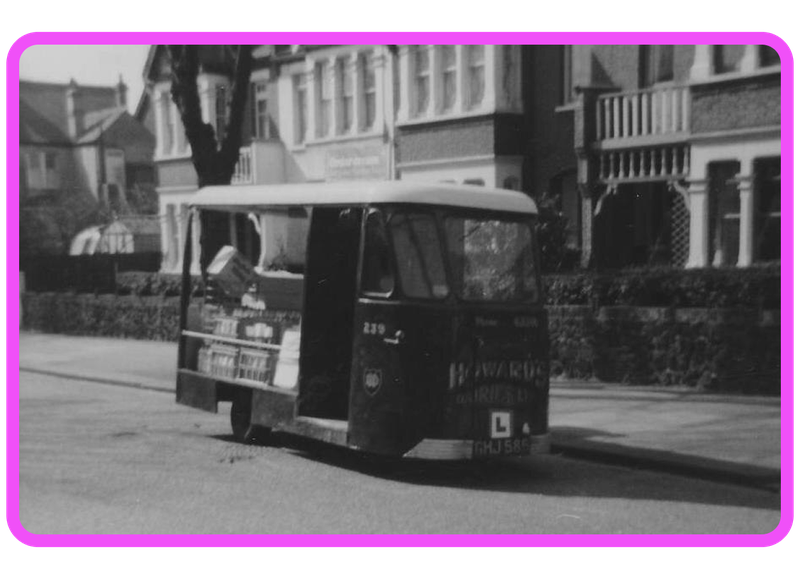
A electric milk float in Southend-on-Sea around 1970
The origins of the electric milk float can be traced back to the early 20th century. Alfred Charles Morrison of Leicester was one of the pioneers. His company, Morrison-Electricar was registered in 1933, and its quiet, efficient operation quickly proved ideal for early morning milk deliveries.
Other manufacturers soon followed. The Brush Electrical Engineering Company in Loughborough; Harbilt in Market Harborough; Manulectric in Brighton. Another major name was Wales & Edwards, known for its distinctive three-wheeled floats. Their focus was on creating a robust, simple, and economical vehicle perfectly suited to the stop-start nature of a milk round.
Fighting for you
At Octopus Energy, we'll never stop battling to get your bills down. Find out why they're still so high (and what the government should do about it) in our new newsletter, Rewire.
The next revolution isn't just about building the cars, it's about integrating them into our lives and power grids

For a time, Britain led the world and the gentle whir of the milk float and the clinking of glass bottles became a cherished part of the nation’s soundscape. An electric hum woven into the fabric of British life.
An opportunity wasted
But Britain never capitalised on the opportunity. The milk float of 1990 was barely different to the one in 1970. As supermarkets began selling cheap plastic cartons of milk, the milk round fell into decline. The manufacturers, so adept at refining a vehicle for a specific task, found themselves unable to pivot when that task became obsolete. The quiet hum of the electric milk float was gradually replaced by the rumble of diesel delivery lorries supplying supermarkets.
A uniquely British chapter in the history of the electric vehicles came to a close.
What the humble milk float teaches us
Today, the race to build the next generation of electric cars has already begun, and largely won by manufacturing powerhouses in China. But the milk float offers a vital lesson: the next revolution isn’t just about building the cars, it’s about integrating them into our lives and power grids.
The exciting new field of vehicle-to-grid (V2G) technology, where cars can power homes and stabilise the electricity grid, is a frontier we can still lead. Let’s not make the same mistake twice and watch another golden opportunity drive away.
Published on 2nd April 2026 by:

Hey I'm Constantine, welcome to Octopus Energy!
×Close window