Why are Outgoing Octopus export prices changing from March 1 2026
Outgoing Octopus export prices will fall to 12p/kWh from March 1st 2026.
This is our first change in export rates since 2022, when wholesale costs rose sharply following the invasion of Ukraine. We were swift to increase our rates, firstly to 7.5p / kWh in February, and then again to 15 p / kWh in September — and our Outgoing Octopus rates have remained at this level ever since.
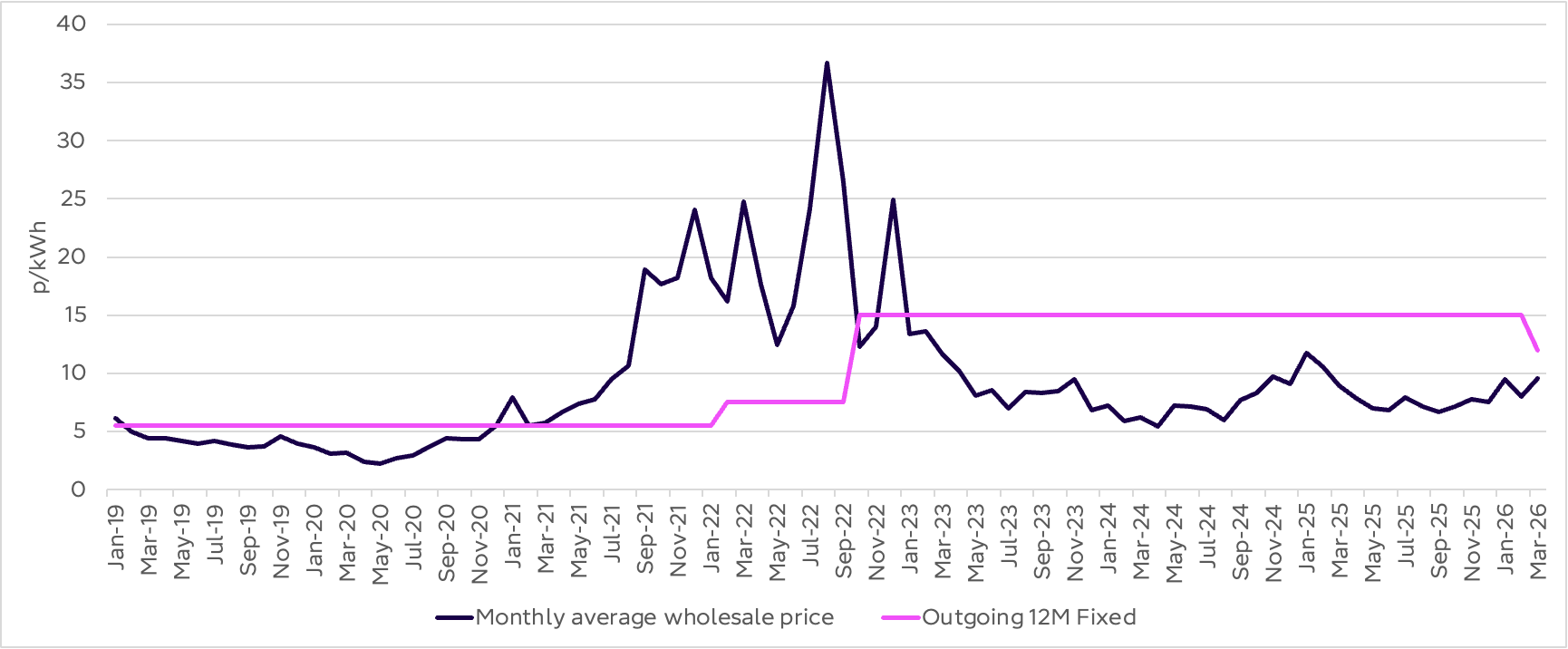
However, wholesale energy costs fell significantly in 2023, and have been reasonably settled since April 2024, either rising or falling a few percent every quarter, with policy and network costs — which aren’t applied to export payments — generally rising.
We will continue be slow to lower export rates and quick to raise them – and to work for a fairer, cleaner energy system that delivers value to those investing in solar export and innovation in the energy system.
Wondering why export prices are so much lower than import?
There’s a few factors at play: import tariffs are subject to a lot of levies and charges — which you don’t get back when you export. Then, with no standing charges on export tariffs, the fixed costs of administering and maintaining the tariff have to come off the unit rate.
Additionally, single rate export tariffs don’t benefit at all from dynamic pricing — so the majority of the energy is exported at times when there’s abundant supply from tens of thousands of other homes and industrial scale solar farms, and generally low demand for electricity.