

How to bleed your radiator
If some of your radiators aren’t heating evenly, a quick bleed can help your heat pump work more efficiently. Here’s how to do it safely - or you can watch Naomi, one of our engineers, walk through the steps in this handy video.
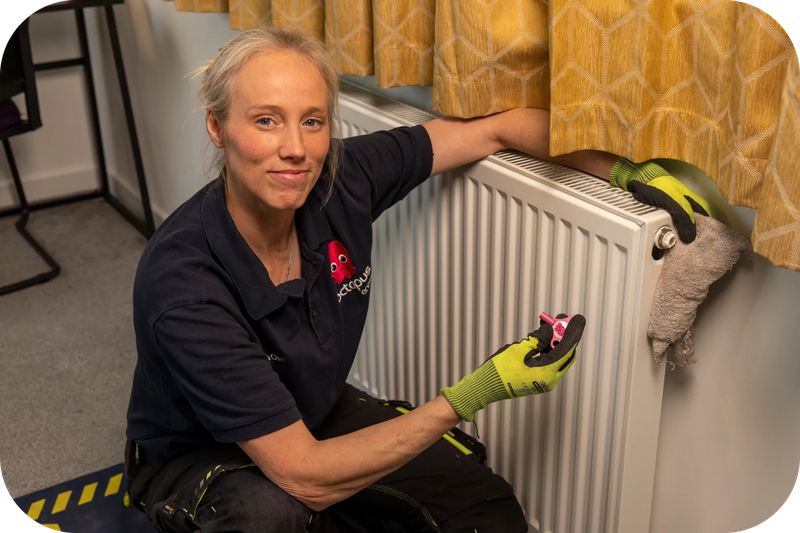
- Turn off your heating
Before you start, switch off your heat pump and let your radiators cool down. You don’t want to risk hot water splashes. - Identify which radiator needs bleeding
Look for cold spots at the top or listen for gurgling noises. That’s trapped air stopping your radiators from warming up properly. - Prepare your tools
Grab a cloth or towel and a small container to catch any drips. Place the cloth under the bleed valve.
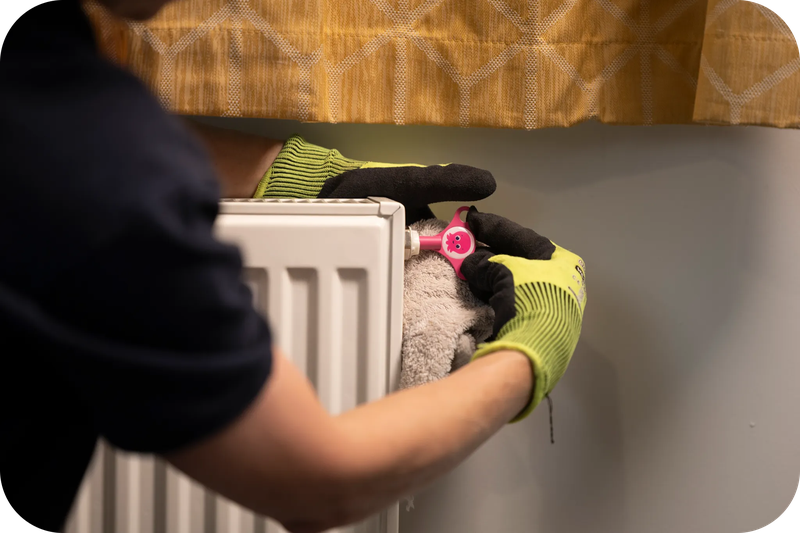
- Open the bleed valve
Use your radiator key (or a screwdriver) to turn the valve slowly anti-clockwise - usually just a quarter to half a turn. - Release the trapped air
You’ll hear a hiss - that’s the air escaping. Once the hissing stops, water will start to trickle out. - Close the valve carefully
Turn it clockwise until it’s snug. Don’t over-tighten - it just needs to be closed securely.
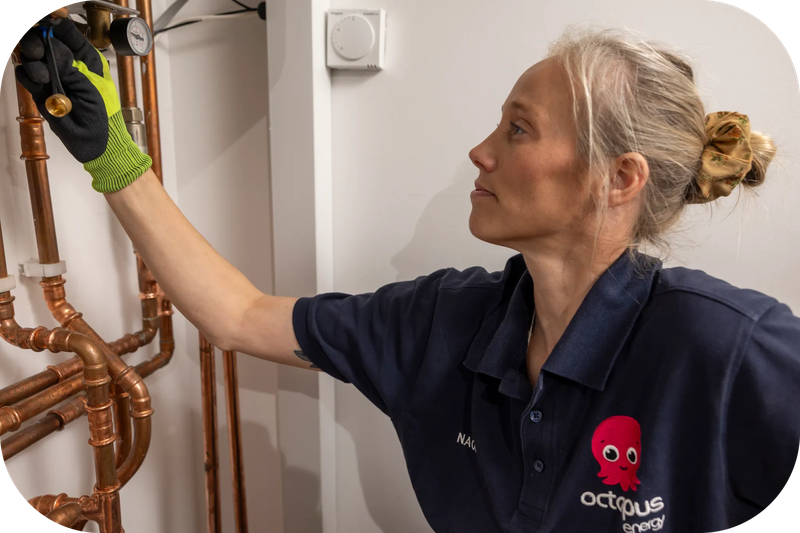
- Check your system
Switch your heat pump back on and check that all radiators heat evenly. Check your system's pressure. Have a look at the gauge on your cylinder or your heat pump screen. If it’s below 1 bar, it’s time to top it up by following this step by step guide.

Pro tip:
If you have multiple radiators to bleed, start with the ones furthest from your heat pump and work your way back.
How often should you bleed your radiators? Once a year is usually enough - ideally before winter - so your heat pump runs efficiently all season.
Still need help? Get in touch.
×
Submit a support request: here
Call us: 0808 196 6842
Our aftercare phone lines are open 8am – 8pm Monday to Saturday, 10am - 6pm Sunday.
There are other ways to get in touch too.
Hey I'm Constantine, welcome to Octopus Energy!
×Close window